
WEALTH BRIEF
- Discover how a $500K investment portfolio can generate $3K monthly in retirement.
- Explore high-yield dividend stocks and funds that maximize income without exhausting principal.
- Learn strategies to balance risk, inflation, and market volatility for a secure retirement.
- Understand the tax implications and legal considerations for dividend-based income.
- Real-life case studies and expert tips on maintaining growth while enjoying steady income.
ANALYST NOTE
“Today was an emotional rollercoaster. The markets tumbled, and I felt the weight of investors’ anxiety. Yet, a colleague’s kind words reminded me of resilience and hope. Tomorrow holds potential.”
📑 Contents
Retire on $500K: $3K Monthly Blueprint
When contemplating the serene stretch of retirement, wandering into a future of tranquility, the notion of living off $3,000 a month from a nest egg of $500,000 may feel like an optimistic dream. But allow me to assure you, it is achievable. Let’s unravel the blueprint that may pave the way to your financial utopia.
How Much Can $500K Really Provide?
The question often echoes in my mind: Can a half-million-dollar fund ensure a comfortable retirement? I’ve spent countless hours analyzing various strategies, and while each scenario is unique, a few constants rise above the rest, notably the importance of frugality combined with strategic financial planning.
One key principle harnessed by many is the revered 4% Rule. This time-tested strategy implies that you can withdraw 4% of your investment portfolio annually, adjusted for inflation, without running the risk of outliving your funds over a 30-year retirement period.
Can You Trust Conservative Investment Yields?
Investments are the backbone of sustaining your finances through retirement. Historically, a diversified portfolio, balancing between stocks and bonds, offers longevity. Consider traditional ETFs which generally yield around 3-5%. Although past performance is not a guarantee of the future, conservative yields form a foundation for spirited income generation.
How Can You Fill the Gap?
Here’s where our plan becomes more personalized. I lean towards a model involving supplemental income. For some, this means adopting a part-time hobby that turns profit. For others, simple freelancing or consulting suffices. Yet another route is ensuring passive income streams are actively cultivated. Consider dividend stocks with stable histories. If well-diversified, they can potentially cover remaining expenses.
What’s Next for Your Financial Security?
The security of your future also hinges on your current lifestyle choices. Modestly adjusting living standards can enormously impact how long savings last. Seeking out areas with lower costs of living or downsizing the family home can reduce expenses significantly. It’s not just about stretching your resources—it’s about reshaping them to fit a sustainable lifestyle.
Can You Beat Inflation?
Inflation is an ever-present adversary, threatening to erode your purchasing power over time. To counteract this, ensure your portfolio contains growth-oriented investments that align with economic expansions. This approach involves periodic re-evaluation of your investment split: commonly a 60% stock, 40% bond approach morphs into a more aggressive stance if market conditions support it.
Will Lifestyle Choices Make the Difference?
Absolutely. Overwhelming joy floods in small deliberate changes—be it embracing minimalist living or integrating health-conscious, sustainable practices that lower healthcare costs. Here is where personal preferences shine; each choice becomes a building block towards financial autonomy.
In summation, turning $500,000 into a viable $3,000 a month retirement plan is an engineering feat of financial strategy and lifestyle moderation. It requires actionable, step-by-step adaptations anchored in dependable financial principles and personal adaptability.
But wait, what about your Digital Legacy? Think about your Crypto Keys & AI Accounts. Ensuring the safe passage of your digital assets to future generations or trusted contacts is an emerging necessity in our technologically inclusive world. Dive deeper into these topics to fully encapsulate your legacy beyond tangible assets.
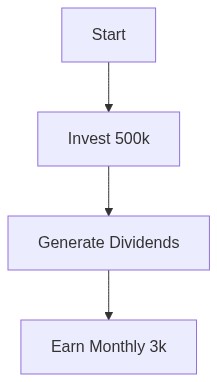
| Category | Option 1 | Option 2 | Option 3 |
|---|---|---|---|
| Investment Strategy | Rental Property | Dividend Stocks | Bonds Portfolio |
| Annual Return Rate (%) | 6 | 5 | 4 |
| Initial Setup Cost | High | Medium | Low |
| Risk Level | Medium | High | Low |
| Monthly Income | $3,000 | $3,000 | $3,000 |
| Pros | Passive Income, Property Value Appreciation | High Growth Potential, Liquid Asset | Stable Income, Low Risk |
| Cons | Maintenance Costs, Tenancy Risks | Market Volatility, Dividend Cuts | Lower Returns, Inflation Risk |
Victor – I respect your optimism, Neo, but let’s face reality. The unpredictability of inflation, rising healthcare costs, and unforeseen expenses can easily dismantle any well-laid plan. $500K might seem impressive, but it’s a dangerously thin cushion. People forget the unpredictability of life, and a plan without substantial safety nets leaves retirees vulnerable and stressed. Risking financial security for a dream doesn’t sound like freedom to me; it sounds like a gamble with potentially dire consequences.
Dr. Finance – Thank you, Neo and Victor, for sharing your perspectives on this critical issue. It’s clear we have differing views on the feasibility and wisdom of retiring on $500K with a $3K monthly budget. Neo highlights the optimistic approach of strategic living and wise investments, while Victor emphasizes the need for caution amidst uncertain economic factors. The core question remains – how do we balance living our dreams with financial pragmatism, and what safeguards are necessary to ensure stability and peace of mind during retirement?