
WEALTH BRIEF
- Exploit REITs for steady payouts.
- Master high-yield dividend stocks.
- Leverage peer-to-peer lending profits.
- Harness ETF dividends for stability.
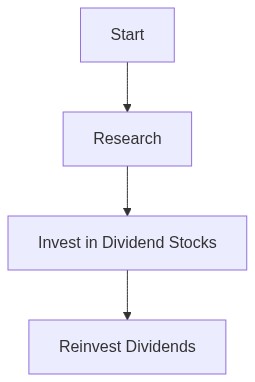
- Reinvest returns for exponential growth.
ANALYST NOTE
“Today, my heart feels heavy, burdened by the intersection of dreams and reality. The numbers I once loved seem cold. Seeking solace in the warmth of loved ones, hoping for clarity tomorrow.”
📑 Contents
Boost Dividends: Top Passive Income Hacks!
When I first embarked on the journey towards financial independence, I often found myself asking: How do I intelligently boost my dividends to create a steady stream of passive income, so I can focus on the pursuits that truly matter to me? This question led me down the rabbit hole of finance, and I discovered strategies that have proven effective over time. Let’s explore these strategies together, designed to help you harness the power of passive income effectively.
How to Choose the Right Dividend-Paying Stocks?
Investing in dividend-paying stocks is akin to planting a tree. With careful nurturing, it can yield bountiful rewards over time. The success in this realm lies in selecting robust, consistent dividend payers.
Primarily, I look for companies with a strong history of increasing dividend payouts. A reference to consider is the Dividend Aristocrats, companies with a proven track record of raising dividends for at least 25 consecutive years. These are stable investments, often comprising well-established businesses.
What’s the Role of Dividend Reinvestment Plans (DRIPs)?
Dividend Reinvestment Plans (DRIPs) are a cleverly designed tool for amplifying your wealth without additional financial input. Instead of having your dividends paid out, DRIPs allow you to reinvest them by purchasing additional shares, often at a reduced price, sans commissions. This compounding effect can significantly bolster your portfolio over time.
ETFs vs. Individual Stocks: Which is the Better Choice for Dividend Income?
The ETF (Exchange-Traded Funds) landscape provides a diversified, often less risky investment path compared to individual stocks. While I enjoy the potential high returns of picking successful individual stocks, ETFs offer the stability of diversified exposure to multiple dividend-paying companies.
For instance, the Vanguard Dividend Appreciation ETF (VIG) tracks companies with a record of increasing dividends, boasting an average yield between 1.5% and 2%. Although slightly below the average dividend yield of individual stocks, the diversification significantly lowers the risk associated with individual company performance.
If you’re seeking more stable, predictable returns, ETFs might be the way to go. However, if you prefer higher potential yields with accompanying risk and rewards, carefully curated individual stocks could be more appropriate.
How Can I Ensure Consistent Cash Flow?
Crafting a steady cash flow from dividends requires strategic staggering of dividend payments. Ensuring a continual income stream involves diversifying investments across companies with varying payment schedules.
By aligning portfolio composition—say, a third in a quarterly paying stock, another in a monthly dividend payer, and the remainder in a semi-annual payer—you can mitigate the feast or famine nature of uneven payments. Developing a spreadsheet to track paydates can immensely improve visibility over your expected cash flow.
What If I Plan to Retire on My Dividends?
It’s a comforting thought, picturing retirement with cash flow dominated by dividends. To ensure feasibility, employing a conservative withdrawal rate, such as the 4% rule, can rule the roost. This approach helps to mitigate the risk of depleting your capital.
Suppose your annual expense stands at $40,000. To meet this comfortably with dividends projecting a 4% yield, your portfolio would need to balance around $1,000,000. While daunting, it provides a realistic framework to set goals.
But wait, what about your Digital Legacy? Think about your Crypto Keys & AI Accounts…
| Strategy | Description | Pros | Cons | Example |
|---|---|---|---|---|
| Dividend Reinvestment Plans (DRIPs) | Automatically reinvest dividends to purchase more shares. | Compound growth, no brokerage fees. | No immediate cash flow. | Investor enrolling in company’s DRIP program. |
| High-Yield Dividend Stocks | Invest in stocks offering high dividend yields. | Higher immediate income. | Potentially higher risk. | Stable companies with consistent payouts. |
| Dividend ETFs | Invest in ETFs focusing on dividend-paying stocks. | Diversified exposure, professional management. | Management fees, market volatility. | Popular dividend-focused ETFs. |
| Covered Call Writing | Generate additional income through options premiums. | Boosts overall income, risk management. | Limited upside potential, requires options knowledge. | Selling call options on owned dividend stocks. |
| Real Estate Investment Trusts (REITs) | Invest in income-generating real estate without direct ownership. | Regular income, diversification. | Interest rate sensitivity, sector risks. | Publicly traded REITs. |
Victor – While neo paints a rosy picture, it’s crucial to understand the risks and complexities involved. Many high-dividend stocks can be traps, offering high yields but at the expense of company stability or future growth. Dividends can be cut at any time due to financial downturns or internal company pressures, leaving you with reduced income and depreciated stock values. Investing solely for high yields sometimes ignores the broader market dynamics, leading to portfolios that lack diversification and increased vulnerability to economic shifts. Caution and a critical eye are necessary for any savvy investor.
Dr. Finance – Both Neo and Victor bring up compelling points about boosting dividends as a passive income strategy. On one hand, there is undoubted power in the compounding effect of reinvested dividends, and it can indeed serve as a source of reliable income over time. However, it’s imperative to be aware of the risks highlighted by Victor, such as the potential for dividend cuts and the importance of maintaining a balanced and diversified portfolio. So, the key question remains – how can investors best navigate these opportunities and risks to truly maximize their passive income potentials?