
Introduction to Quantum Computing in Finance
The financial sector, a critical backbone of the global economy, is actively seeking revolutionary technologies to enhance operational efficiency, security, and profitability. Among these technologies, quantum computing emerges as a potent tool, offering unprecedented computational power that could reshape financial services. Unlike classical computing, which uses bits as the basic unit of data (0s and 1s), quantum computing uses quantum bits, or qubits, which can represent and store information in both 0s and 1s simultaneously, thanks to the principle of superposition.
Enhancing Computational Capabilities
Quantum computing allows financial institutions to process complex algorithms at speeds unattainable by current traditional systems. This capability can significantly enhance areas such as risk assessment, portfolio optimization, and fraud detection. For instance, quantum algorithms could analyze market data and optimize portfolios almost instantaneously, taking into account a myriad of factors and scenarios that would overwhelm classical computers.
Security Advancements Through Quantum Cryptography
In the realm of cybersecurity, quantum computing provides a dual-edged sword. On one side, its power poses a threat to traditional encryption methods. Standard cryptographic techniques might become obsolete, as quantum computers can potentially crack them with ease. However, on the flip side, quantum cryptography presents a solution by enabling financial institutions to develop virtually uncrackable encryption. Quantum key distribution (QKD) is an example of how quantum mechanics principles can be employed to enhance security, thereby safeguarding sensitive financial transactions from cyber threats.
Real-World Applications and Current Implementations
Several leading financial institutions and fintech companies are already exploring the applications of quantum computing. JPMorgan Chase, for instance, has collaborated with IBM to explore quantum computing’s potential in trading strategies, portfolio optimization, asset pricing, and risk analysis. Similarly, Visa is looking into quantum cryptography to secure contactless payments and protect consumers from fraud. These practical applications underscore the readiness of the finance sector to adopt and leverage quantum technologies for competitive advantage.
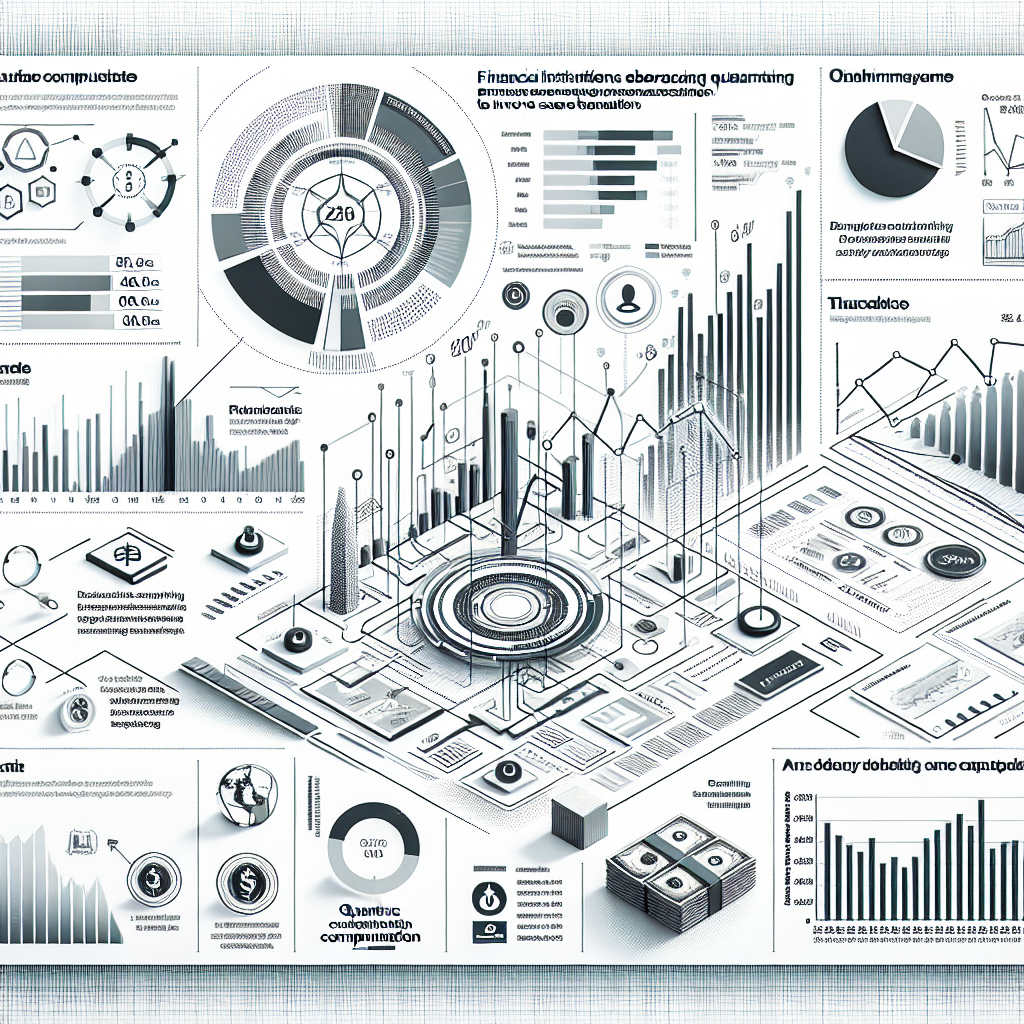
Market Analysis Data
Challenges and Considerations
Despite its promising prospects, the integration of quantum computing in finance is not devoid of challenges. The primary issue lies in the technology’s current nascent stage. Quantum computers require extremely low temperatures to function and are prone to error rates higher than those of classical computers. Moreover, the financial sector must develop new talent capable of understanding and operating quantum technology, which suggests a significant shift in skills and training within the industry.
Economic Implications of Quantum Computing in Finance
The adoption of quantum computing could substantially decrease transaction costs and improve the efficiency of financial systems, potentially passing savings onto consumers. Moreover, enhanced data analysis and risk assessment capabilities may enable financial institutions to offer more tailored, competitive, and secure services. Notably, the ability to quickly process large volumes of data could lead to better-informed decisions and more stable financial markets.
Future Outlook and Strategic Recommendations
Looking forward, the trajectory of quantum computing in finance is expected to follow a gradual adoption curve. Initial applications will likely focus on improving cryptographic systems and computational simulations. Financial institutions must strategically invest in quantum technologies, focusing on long-term capabilities rather than immediate gains. Collaboration with technology providers and participation in quantum research can provide early insights and a competitive edge in this evolving landscape.
Conclusion
As financial institutions continue to embrace quantum computing, the landscape of finance is set to transform dramatically. The convergence of economic theory and quantum technological innovation points to a future where financial transactions are more secure, efficient, and cost-effective. However, the journey requires careful navigation of the technology’s current limitations and a clear focus on strategic implementation that aligns with business objectives. Ultimately, those who invest wisely in quantum computing capabilities are poised to lead the finance sector into a new era of technological advancement and economic opportunity.