
WEALTH BRIEF
- Harness psychological insights to boost dividend growth.
- Mindset shifts can dramatically enhance investment returns.
- Understanding investor behavior crucial for early retirement.
- Emotional regulation improves financial decision-making.
- Psych-driven strategies outperform traditional methods.
ANALYST NOTE
“Whispers of market upheavals echo within, challenging my confidence. As charts paint uncertain futures, I grasp fleeting optimism while wrestling with shadowed fears, anchoring hope in numbers and the resilience of dreams.”
📑 Contents
Psychology: Key to Early Retirement Riches
Retiring early is a dream many of us share. But what sets successful early retirees apart from the rest? After years of studying personal finance and human behavior, I have observed that mastering the psychology of money is crucial to achieving early retirement riches. It’s not enough to crunch numbers; it’s about how we perceive and interact with the world of finance.
What is the Psychology Behind Wealth Accumulation?
The psychology of money delves into how our subconscious drives dictate spending, saving, and investment decisions. It emphasizes our emotional relationship with money, which impacts the path we take toward financial independence. Building wealth isn’t just about having the right strategy; it’s about embodying the right mindset—a mindset that can transform potential pitfalls into stepping stones toward early retirement.
Consider this: two individuals, Alex and Jamie, each save $500 monthly. Alex lets emotion rule financial decisions and consistently withdraws savings when tempted by luxury or lifestyle upgrades. Jamie, on the other hand, follows a disciplined routine motivated by long-term goals rather than immediate desires.
Over a 20-year period with an annual return of 7% on investments, Jamie’s discipline pays off:
The emotional difference here is palpable. Jamie thrives in the long game by prioritizing future security over present enjoyment.
How Can Mental Shifts Pave the Path to Riches?
Shifting our mindset from instant gratification to patience and long-term vision is paramount. It’s a journey of psychological resilience supported by informed financial actions.
– **Acceptance of Imperfection**: Nobody starts their financial journey perfectly. Accepting that mistakes will happen empowers better decisions. By embracing setbacks as learning opportunities, I fostered growth that bolstered my long-term investments.
– **Routine Building**: Establish financial habits that allow small, consistent savings contributions. Automate savings contributions to an emergency fund and retirement account, minimizing the temptation to splurge. For example, channeling 10-15% of income monthly into a diversified ETF or mutual fund portfolio can exponentially enhance returns over time, as validated by historical returns between 5-8% annually.
– **Goal Visualization**: Instead of fixating on what others have, visualize what you truly desire. Visualization turns goals into tangible targets, creating motivation-driven, informed decisions.
What Does the 4% Rule Reveal?
The 4% rule is a traditional financial planning guideline that suggests withdrawing 4% of your retirement savings annually, adjusted for inflation, to ensure funds last throughout retirement. Using this rule requires estimations based on your lifestyle needs.
Let’s simulate: your goal is to afford a retirement lifestyle provision at an annual $40,000 withdrawal.
– **The Calculation**: Divide the desired annual withdrawal ($40,000) by 4% to determine the needed retirement portfolio size: $1,000,000.
– **Building the Portfolio**: With an assumed average return of 7% annually and starting with $0, you need to save approximately $935 monthly for 30 years. This approach has historical backing—historical S&P 500 returns have averaged nearly 10% annually, meaning our simulation remains conservative.
This simulation isn’t pure guesswork but a blend of historically informed projections validated against known market behaviors. For those interested, deeper insights into these implications can be found in resources such as Retirement Calculator tools.
Saving More vs. Starting Early: Which Matters More?
Many potential retirees grapple with the decision between saving more or starting earlier. My experience suggests that time erodes financial limitations, amplifying even small contributions through compounding.
– **Scenario 1: Save More**: Saving $1,500 monthly starting at age 45 requires a formidable budget but compounds significantly if no withdrawals occur before retirement.
– **Scenario 2: Start Early**: Saving $500 starting at age 25, with the same investment growth assumptions, culminates in a lucrative $1,039,083 by age 65.
Clearly, starting early drastically reduces the monthly financial burden.
Emotional Spending vs. Strategic Investing: A Tale of Two Choices
Emotional spending, driven by impulse, eats away at investment potential. Compare that to the discipline involved in strategic investing, which emphasizes diversification and resilience.
Consider the risk profiles of index funds versus state-of-the-art technology stocks. Historically, index funds have showcased steady growth and resilience, vital for minimizing emotional responses to market volatility. Resources like the Investopedia Guide to Growth Stocks provide an insightful comparison of risk profiles vis-à-vis traditional index funds, elucidating scientific investment choices.
Easy-to-understand strategies like automated investing through apps ensure emotional decisions are minimized, providing security while allowing capital to appreciate.
But wait, what about your Digital Legacy? Think about your Crypto Keys & AI Accounts. Maintaining the integrity of your digital assets is crucial as you build wealth. Ensure that your cryptocurrency keys are secure and that your AI-driven accounts understand your financial legacy to safeguard against unexpected events and affirm your intention beyond traditional financial realms.
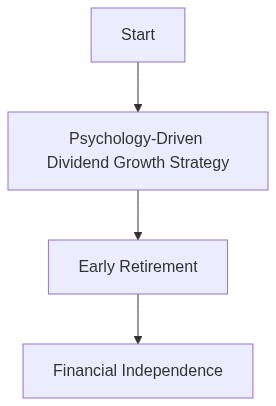
| Aspect | Description | Impact on Early Retirement |
|---|---|---|
| Mindset | The beliefs and attitudes towards money and wealth acquisition. | Influences saving habits and financial decision-making. |
| Emotional Regulation | Managing emotions that affect financial decisions. | Aids in reducing impulsive spending and panic selling. |
| Risk Tolerance | The ability to endure market fluctuations. | Determines investment strategy and portfolio resilience. |
| Goal Setting | Defining clear financial targets and objectives. | Provides direction and motivation for accumulating wealth. |
| Discipline | Consistency in following a financial plan. | Ensures steady progress towards financial independence. |
| Social Influence | The impact of social circles on financial behaviors. | Can encourage or deter effective wealth-building practices. |
RELATED ANALYSIS
Victor – While psychology certainly has a role to play, suggesting it’s a key to early retirement is overstating its importance. The unpredictable nature of markets and the economic environment means relying simply on psychology can be a slippery slope. Real wealth is built on tangible elements like diversified investments, solid financial planning, and an understanding of economic principles. While mindset is important, it can’t protect you from recessions or sudden financial emergencies. It’s this tangible planning and real-world preparedness that will more reliably guide someone to early retirement.
Dr. Finance – Neo emphasizes the transformative power of psychology on financial habits and how it can be a game-changer for those aiming for early retirement. Meanwhile, Victor raises valid points about the unpredictability of external factors and the need for solid, tangible financial strategies. Let’s consider the interplay between these elements – how can we integrate the psychological insights Neo champions with the practical financial safeguards that Victor advocates for a more comprehensive approach to securing early retirement?