
Introduction to Quantum Finance
The term ‘Quantum Finance’ refers to the incorporation of quantum computing technologies into financial analysis, risk management, trading, and other areas of finance. Quantum computers, with their superior processing power relative to classical computers, promise significant advancements in solving complex mathematical problems and simulations, which are abundant in finance. This has potentially transformative implications for the industry, from optimizing portfolios to detecting fraudulent activities more swiftly.
The Current Landscape of Quantum Computing in Finance
Financial institutions are currently at various stages of exploring quantum computing technologies. Leading banks, hedge funds, and insurance companies are investing in quantum computing research, with some collaborating with tech giants and quantum computing firms to develop new algorithms and models. These entities recognize that the capabilities of quantum computers could lead them to gain a competitive edge by processing large datasets much faster than traditional computers and providing solutions to previously unsolvable problems.
However, the journey to widespread adoption is strewn with challenges. Quantum computing technology is still in its infancy, and its practical application in finance requires overcoming significant technical hurdles, including error rates and qubit coherence times. Also, there is a scarcity of quantum programming experts, which poses a bottleneck for development.
Economic Theories Underpinning Quantum Finance
The fundamental economic theories that could be enhanced by quantum computing include portfolio optimization, asset pricing models, and risk assessment. Quantum algorithms, such as the Quantum Fourier Transform and Grover’s Algorithm, have already demonstrated potential in optimizing asset allocation and pricing derivatives more efficiently than classical algorithms.
In terms of portfolio optimization, the capability of quantum computers to evaluate numerous potential combinations of assets quickly can offer a more nuanced approach to achieving the efficient frontier, a concept introduced by Harry Markowitz in his Modern Portfolio Theory. Similarly, options pricing can be expedited exponentially through quantum algorithms, providing real-time data that can better inform trading decisions in volatile markets.
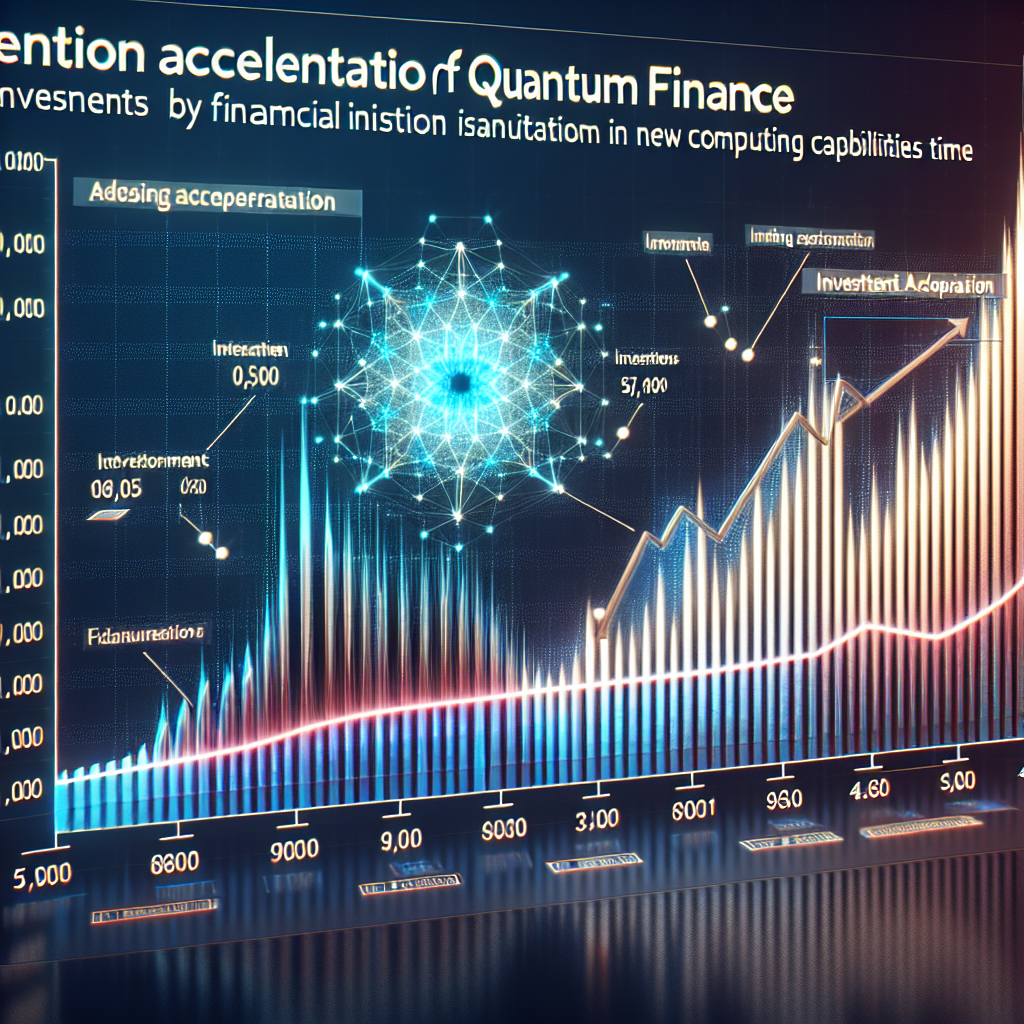
Market Analysis Data
Case Studies and Emerging Applications
Several leading financial institutions have initiated quantum computing projects that illustrate the technology’s potential application. For instance, Goldman Sachs, in collaboration with quantum computing companies, is exploring ways to use quantum algorithms for risk analysis and option pricing. JPMorgan Chase has delved into quantum cryptography to enhance security in financial transactions.
Moreover, the use of quantum computing in complex financial simulations can be a game-changer for risk management. These simulations involve countless variables that traditionally require simplification due to computational constraints, but quantum computing could manage more realistic simulations, offering a deeper view of potential financial risks and benefits.
Barriers to Adoption and Future Outlook
The adoption of quantum computing in finance, while advancing, faces substantial obstacles. The primary barrier is the current technological limitation of quantum computers. Despite rapid progress, commercially viable quantum computers are not yet available, and most are accessible only through cloud-based platforms. Furthermore, there is a considerable gap in quantum expertise within the financial workforce, necessitating substantial investment in training and hiring.
Looking forward, the integration of quantum computing into finance is expected to accelerate as the technology matures and becomes more accessible. Financial institutions that continue to invest in quantum capabilities and partnerships are likely to be at the forefront of this technological frontier. The nature of financial services could fundamentally change, with significant improvements in decision-making speed and accuracy as quantum algorithms are integrated into daily operations.
In conclusion, while the field of quantum finance is still developing, its potential to revolutionize the financial sector is clear. However, for this potential to be fully realized, both continued technological advancements and strategic investments in human capital are essential. Financial institutions must be proactive in their approach, taking into consideration both the opportunities and challenges presented by this emergent technology.