
WEALTH BRIEF
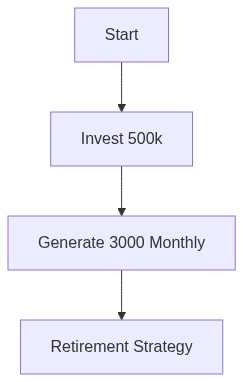
- Investing $500K can generate $3,000 monthly.
- Focus on high-yield dividend stocks and ETFs.
- Diversify to mitigate risk and ensure steady growth.
- Reinvest dividends for compound returns over time.
- Tax efficiency is crucial in maximizing returns.
ANALYST NOTE
“Today, the weight of numbers felt heavier than usual. Market fluctuations mirrored my own uncertainties. Amid spreadsheets, I yearned for clarity and balance, hoping tomorrow brings steadier ground and renewed optimism.”
📑 Contents
- Why $3K Monthly?
- How to Build a Dividend Portfolio to Achieve This?
- What Does a Realistic Portfolio Look Like?
- Sounds Great! What Are the Investments?
- How to Mitigate Risks?
- VS: Dividends or Selling Assets for Income?
- Step-by-Step: Setting Up My Dividend Portfolio
- Final Thoughts: Your Retirement Vision
Retire in Style with $3K Monthly Dividends
As I approach my golden years, the dream of a comfortable, relaxed retirement dances in my mind. Many of us imagine sipping tea on the porch, traveling on a whim, or indulging hobbies we never had time for in our working years. But how do we fund these dreams? Achieving a $3K monthly dividend seems almost like winning the lottery. Trust me, it’s more attainable than you think.
Why $3K Monthly?
$3,000 a month in dividends works out to $36,000 annually. It provides a cushion for living expenses, travel, healthcare, and unforeseen expenditures without significant financial strain. While this amount can vary depending on your lifestyle, it serves as a realistic benchmark for many.
How to Build a Dividend Portfolio to Achieve This?
- Research and Select High-Quality Dividend Stocks: I start by researching companies with a history of paying dividends. Investopedia suggests focusing on dividend aristocrats—companies that have consistently increased dividends over the decades.
- Diversification: I diversify across industries to mitigate risk. This ensures my portfolio isn’t drastically affected by the downturn of a particular sector.
- Reinvest Dividends Initially: Early in my investment journey, I reinvest dividends to capitalize on compounding returns.
What Does a Realistic Portfolio Look Like?
Given today’s dividend yield average of approximately 3-4%, here’s a hypothetical but realistic setup:
Sounds Great! What Are the Investments?
My portfolio might include:
- Broad Market ETFs: With relatively low expense ratios, these offer diversified exposure. According to Fidelity’s ETF guide, consider funds like SPY or VTI.
- Dividend ETFs: Funds like Schwab U.S. Dividend Equity ETF (SCHD) or Vanguard Dividend Appreciation ETF (VIG) seek high dividend yields.
- REITs: Real Estate Investment Trusts often provide higher yields. Diversifying between retail, industrial, and healthcare REITs cushions risks.
How to Mitigate Risks?
Investments naturally carry risks, but several strategies help mitigate them:
- Regular Reviews: Annually reviewing my portfolio ensures I adjust allocations based on market performance and any changes in personal risk tolerance.
- Dividend Safety Check: I scrutinize payout ratios, ensuring companies maintain dividends without financial strain. Historical consistency and company growth projections are crucial.
VS: Dividends or Selling Assets for Income?
While a dividend strategy works wonders for steady income, it’s not the only way. The 4% withdrawal rule is another. Comparatively:
- Consistency: Dividends offer periodic, predictable payouts. Withdrawing assets can be unpredictable due to market volatility.
- Growth: Leaving principal to grow while earning dividends aligns with wealth preservation. Selling off assets may dwindle capital over time.
Step-by-Step: Setting Up My Dividend Portfolio
- Budget: Calculate current expenses and potential inflation to determine exact income needs.
- Educate: Follow up by reading authoritative guides and perhaps consult financial advisors.
- Start Small: I might begin with a couple of stocks and ETFs, reinvesting dividends initially.
- Monitor and Adjust: Every quarter, evaluate performance and rebalance if needed.
Final Thoughts: Your Retirement Vision
No two retirement dreams are identical. Tailor these strategies to fit personal goals. Diversified investments, realistic targets, and continuous adjustments are my keys.
But wait, what about your Digital Legacy? Think about your Crypto Keys & AI Accounts… Whether crypto investments or passwords for AI-driven services, ensure these are accessible to those you trust. Plan not just your financial future but your digital one as well.
| Investment Option | Initial Investment Needed | Expected Dividend Yield | Key Benefits |
|---|---|---|---|
| Dividend Stocks | $400,000 | 9% | Potential for Capital Appreciation |
| Real Estate Investment Trusts (REITs) | $500,000 | 7.5% | Regular Income, Diversification |
| Preferred Shares | $600,000 | 6% | Stable Income, Priority Over Common Shares |
| Bonds | $1,000,000 | 3.6% | Low Risk, Fixed Income |
| Bond Funds | $1,200,000 | 3% | Professional Management, Diverse Portfolio |
Victor – While the idea of collecting a steady stream of dividends to fund your retirement sounds appealing, the risks are too significant to ignore. Markets are volatile, dividend policies can change, and companies can cut or eliminate their payouts in tough times, leaving retirees vulnerable. Pinning your financial future on this unpredictable income is fraught with uncertainty, and any unforeseen economic downturn could drastically reduce or even wipe out these dividends. It’s critical to plan for a comprehensive retirement strategy that includes a mix of income streams rather than relying solely on these potentially unstable payouts.
Dr. Finance – Both perspectives bring crucial insights into the discussion on dividend-based retirement planning. It’s essential to weigh tapping into dividends for passive income against the inherent market risks and volatility associated with equity investments. Achieving a balance, perhaps by diversifying into other income sources and maintaining a robust, adaptable portfolio, might offer retirees greater stability. As we delve deeper, let’s explore strategies for mitigating these risks while optimizing the potential rewards in a sustainable way.