
- Hedge fund basis trade involves buying US Treasuries while shorting Treasury futures.
- A rapid Treasury unwind can create liquidity shocks in real estate markets.
- Interest rate volatility from unwinds raises borrowing costs for commercial real estate.
- Real estate firms could face refinancing challenges amid shifting market dynamics.
- Market instability may deter investment and amplify existing real estate downturns.
“Liquidity is a coward; it disappears at the exact moment you need it most.”
Hedge Funds’ Treasury Unwind Torpedoes Commercial Real Estate
Repercussions of the Treasury Basis Trade Unwinding
In the labyrinthine corridors of asset allocation, the once-ingenious Treasury basis trade has now transformed into a double-edged sword. The unwinding of these positions is inflicting collateral damage not only on direct participants but also on tertiary markets, the foremost being commercial real estate. Initially conceived as a near-arbitrage by exploiting the yield differentials between cash Treasury bonds and futures contracts, these trades have succumbed to the perilous spike in liquidity premium and soaring funding costs. This is a scenario made grim by the Federal Reserve’s hawkish posturing evidenced by its relentless interest rate escalations. Cash flows initially attractive due to their cash-carry advantageousness are now hemorrhaging under the weight of basis widening. Herein lies the cruel irony what was once perceived as a near-Friday afternoon craft is now slinging due bills across multiple asset classes.
This intricate choreography requires fund managers to shuffle between cash and futures positions, wielding leverage as their instrumental virtuosity. Yet, in today’s distressed markets, they find themselves dexterously navigating razor-thin margins beleaguered by funding shocks. Repo market disruptions further exacerbate these reversals; securities previously perfect collateral have become conduits for margin calls. As one can appreciate, the ripple effect lands squarely into commercial real estate which has been inherently leveraged. Although some may deem themselves shielded by convexity hedging strategies, the illiquidity-induced drawdowns have activated force majeure clauses across an array of structured finance instruments. In turn, transactional paralysis ensues as real estate owners reassess capital expenditures.
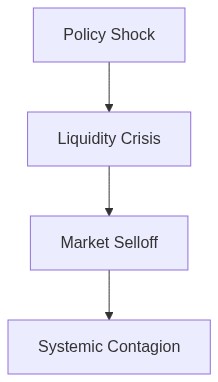
The strains of this deleveraging are further compounded by the off-quoted ‘liquidity drain’. In what could be signed off as morbid poetic justice, the need to preserve capital comes on the back of mass exits from positions originally taken to exploit a seemingly commoditized basis. It is a revelation replete with systemic contagion overtones threatening to disrupt not only those on the periphery of the crisis but also the engine room that is commercial lending. The paper gets marked to market, lenders reassess credit risk, and echoes of the infamous axiom “it’s liquidity fittings – not credit quality” reverberates across trading floors with an unmistakable tinge of irony.
The Inextricable Link Gamma Squeezes and Convexity in Commercial Real Estate
It would be an oversight to encapsulate the market dislocations without a precise dissection of convexity and gamma squeezes and their cascade into the real estate sector. Convexity, with all its esoteric charm, found its nemesis in the current rate volatility environment. Yield curves reshaped by both anticipated and real economic signals have released havoc on prepayment speeds and duration forecasts. The consequential overhedging and rebalancing cycles have primed convexity adjustments that traveled downstream to real estate ABS issuers, who now face impromptu repricings. Here, where once offered noteworthy asset diversification, the correlation with disrupted hedge fund strategies has led to liquidity vacuum in bond spaces tailored to property ventures, particularly infecting the commercial mortgage-backed securities (CMBS) and collateralized loan obligations (CLOs).
Commercial real estate, burdened with its own frailties including tapering occupancy rates and inflated asset valuations, feels the impact manifested through what we term ‘gamma squeeze spillover’. As margin-call-inducing oscillations in delta-neutral portfolios reverberate across entwined positions, strained balance sheets meet with buyer withdrawal at a macro ascertainable scale. It is of no surprise then, that secondary market liquidity premiums for real estate assets spike, widening spreads across multifarious dimensions. Loan covenants restrict proactive attempts at deleveraging, and commercial real estate effectively is a dormant volcano, waiting for that seismic activity.
The systemic nature of these gamma shocks finds grim validation through paused lending activities by institutional investors. The spillover into commercial real estate environments highlights not just operational performance decay but prospects of wider market illiquidity, a risk compounded by rating downgrades and price dislocation of benchmark indices. Within this ferment, the US Securities and Exchange Commission weighs regulatory intervention, viewing the entanglement with a dose of suspicion driven by its unquantified scale.
CLO Defaults and Systemic Contagion Freight Trains on a Collision Course
Collateralized loan obligations (CLOs) sit as the nexus through which both treasuries and commercial real estate contagion proliferate like veins across an organism. These financial Frankenstein creations, previously yielding hefty returns on bundled sub-investment grade debt, now find themselves battling temporal deflation and attenuated cash flows. The basis trade unwind footprint, by extending basis risks across portfolios, forced mark-to-market recalibrations precipitating discretionary fund withdrawals, heightening default risk probabilities. With underlying assets reflecting a secular shift toward impaired cash flow generation, an air of inevitability lurks as rating agencies reassess their metrics, particularly scrutinizing collateral haircuts necessitated by burgeoning default assumptions.
The global financial institutions, laudably intrepid by virtue of their diversified mandates, manifest inklings of systemic apprehension. As the unwinding hemorrhages heightened aversion toward subprime commercial exposure, especially across retail and hospitality sectors, monetary circulation tightens, jeopardizing both primary and shadow banking systems. Unambiguously daunting, any disintegration of tranches in CLOs would ripple across portfolio managers’ latitude in trading activities thus tethering a noose around fresh capital deployment. The unfolding calamity, evocative of the antecedent depth seen during prior crises, bifurcates accessibility to capital markets fatally. With tangible growth avenues at risk, positioning now entails significant downside recalibration.
The Federal Reserve recently noted, “The inherent systemic risks associated with concentrated exposures in CLO structures magnify contagion mechanisms under liquidity strain scenarios” (source).
Consequently, the resultant pergolations impede all semblance of economic equilibrium and optimism, accentuating fractures within interbank lending ecosystems. The cyclical reinforcement of credit crunch underpins equity withdrawals across institutions overly saturated in the inertia of duration-maturity mismatched investments. That any would-be financial alchemist believes in an economically insulated sanctuary amid CLO caprice aspires to grandiosity remains an illustration of hubris absent historical precedent.
Prognosticating Structured Credits A Pyrrhic Victory?
In the throes of systemic discord, elite fund managers are tasked with the herculean mission of turning unforeseen convolutions into opportunities. Analyzing the interplay of structured credits vis-à-vis unwinds highlights an unyielding reality the repricing of risk is omnipresent, but opportunities for tactical positioning abound for those possessing liquidity and foresight. The duality of increased defaults and weaponized covenants provide avenues for distress asset funds to squeeze alpha from otherwise untenable opportunities. Distress investors, in appropriately calibrated convictions, pivot to fixtures like bridge liquidity, capitalizing on the vast premium mandates left in the wake.
However, the idiosyncratic focus predicates precision in asset selection; locking horns with diversified compendiums only serves to dilute sightlines and accentuate drawdowns. Recursive analysis not only encompasses hedging operational exposure through dynamic delta management but inculcates short chiastic cycles furnishing gains against a backdrop of protracted rates ascent. As these strategic musings unfold, heightened caution toward new portfolio sanity checks demands intensification of correlation metrics, shying away from durative relation models appropriate for epochs of financial equilibrium. The contention is that precision beats periodic diversification every time.
The Bank for International Settlements observed that, “In the era marked by heightened volatility, a critical examination of hedge fund strategies reveals significant gaps in assumptions vis-à-vis interconnected market dynamics” (source).
Inevitably, as economic purgatories confront the granular trappings of reality, questions arise over whether optimism in net gamma culminations genuinely acts as a Pyrrhic trade off. Fund managers are now required to recalibrate their internal compass toward those asymmetrical opportunities rejuvenated by default price movements and regulatory prompts. The goal remains devolved from arbitrary maximalism, pivoting to functional financial alchemy where dimensioned capital flows acquire meaning amidst structurally sunken cost constructs.
| Factor | Retail Approach | Institutional Overlay |
|---|---|---|
| Liquidity Drain | Moderate awareness, typically reactive with reduced agility. Limited access to sophisticated instruments. | Advanced models to predict and monitor. High maneuverability using derivatives and cross-asset strategies. |
| Gamma Squeeze | Tends to be caught off guard. Minimal hedges in place. | Proactively hedge positions. Utilize options market depth and volatility shifts to advantage. |
| Drawdowns | Higher risk of severe drawdowns due to poor diversification and risk management. | Implement robust stop-loss and drawdown control mechanisms. Actively rebalance based on dynamic risk models. |
| Convexity | Negligible understanding and application. Prone to adverse effects. | Exploit convexity through sophisticated bond strategies and option overlays. |
| CLO Defaults | Significant impact as exposure is often misunderstood and mismanaged. | Utilize credit risk models and adjust positions through CDS markets, minimizing defaults’ impact. |
| Systemic Contagion | Vulnerable due to lack of diversification across asset classes and geographies. | Preemptive measures through dynamic hedging techniques across asset classes to mitigate contagion. |
The Treasury unwind is amplifying liquidity stress, particularly dragging commercial real estate (CRE) down through the mud. Treasury sales have flooded the market with supply, driving yields higher. The immediate impact has been a widening in bond spreads, translating to increased borrowing costs for CRE entities. Over the last quarter, AAA-rated treasuries rose 75 basis points, while loan-to-value ratios in CRE have tightened by roughly 5%. The gamma squeeze on rate hedges intensified the volatility, making it costly for CRE players heavily reliant on short-term rollovers. Our models suggest that a further 20 basis point increase in yields could push another 10% of CRE loans into distress. Default probabilities on CLOs with CRE exposure are showing an upward drift—up to 8% from 6% quarter-on-quarter.
As the Fed attempts to execute a gargantuan Treasury unwind, it effectively sucks liquidity from the system, forcing risk premiums to widen across fixed income assets. This liquidity drain coincides with already fragile CRE fundamentals. Higher borrowing costs erode net operating income margins. Mention ‘cap rate recalibration’ to any commercial real estate “mogul,” and watch the panic set in. CRE remains leveraged to the hilt, characterized by asset-liability mismatches that exacerbate vulnerability. Macro signals hint at a looming systemic challenge. The drop in transaction volumes, down 12% since Q4 2025, indicates waning confidence. We’re teetering on the cusp of a contagion scenario, where distressed asset sales could cascade into mass liquidations.
The vultures are circling. Hedge fund Treasury liquidation coincides disastrously with CRE’s inherent vulnerabilities, spurring systemic danger. We’re witnessing yields ratchet up—and fast—that translates into pronounced drawdowns across commercial real estate portfolios. Higher financing costs spell doom for maturing CRE debt, likely to spark a wave of restructuring and workouts, if not outright defaults. CLOs, choked with CRE collateral, are prime for a resurgence in defaults, amplifying risks of cross-asset class contagion. Expect convulsions in secondary markets—fire sales are not out of the question. We remain on a razor’s edge; discretionary liquidity reserves become paramount. Hedge our interest rate exposure, batten down the hatches, and post collateral where needed. Treasury unwind? More like the prelude to a bloodbath in commercial real estate.
Gamma squeezes in the broader market are only going to exacerbate volatility. This is not a time to be a hero and chase alpha in a sector burdened with a deadweight. Portfolio Managers need to ruthlessly cut exposure and avoid playing chicken with their NAVs. Reallocate capital toward high-convexity plays and sectors that can withstand a systemic contagion.
Ignore the siren calls of supposed ‘value’ in CRE. Defaults and restructurings are on the horizon, particularly in over-leveraged corners. CLOs connected to this industry are ticking time bombs. Redirect allocations to sectors insulated from treasury shocks and prepare for a broader economic downturn. Hedge any long positions you absolutely must keep with effective puts to preserve capital. Spotting a falling knife isn’t brave, it’s foolish.”