
- Yield curve inversion indicates an economic slowdown warning.
- Normalization suggests a shift towards economic recovery.
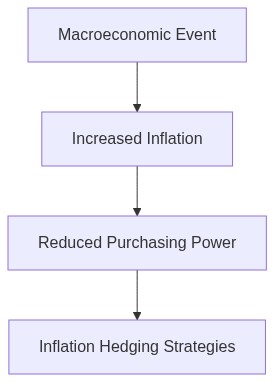
- Inflation hedging becomes a critical strategy for investors.
- Real assets like commodities and real estate gain focus.
- Traditional safe-havens like gold retain their allure.
- Equity rotation towards sectors resilient to rate hikes.
- Global policy shifts impacting inflation expectations.
“Risk cannot be destroyed; it can only be transferred or mispriced.”
Global Yield Curve Panic Inflation Hedging Secrets Revealed!
Interpreting Yield Curve Anomalies Discovering the Implicit Inflationary Signals
The current landscape of the global yield curve is drawing intense scrutiny from elite fund managers. The yield curve’s current configurations have often been seen as an advance indicator of macroeconomic conditions. In an era marked by heightened geopolitical tensions and unique fiscal approaches by central banks, understanding the intricacies behind yield curve anomalies is crucial. As of April 2026, the significance of the yield curve is more pronounced than ever, especially regarding its implications for inflation expectations. This becomes even more evident when factoring in the liquidity premium and convexity adjustments which impact longer-duration bond pricing. Such factors create an implicit distortion, necessitating astute analysis for effective inflation hedging. With bond market volatility at a peak and inflation risk altering the nominal yield landscape, a nuanced understanding of these pricing components is imperative.
Around the globe, the phenomenon of a flattening yield curve has been noted. Typically, such a configuration suggests anticipation of an economic slowdown. However, the current anomalies demand an advanced diagnostic approach. What distinguishes the present is the unusual persistence of inflationary pressures, driven by non-traditional supply shocks and sustained monetary interventions. The liquidity premium, often misunderstood as a minor pricing anomaly, has surged to historically elevated levels. This rise is indicative of heightened uncertainty over short-term funding. The bond market’s current state, underscored by the substantive role of convexity, suggests an over-adjustment by investors bracing for inflationary spikes. The way convexity can affect pricing is a fundamental aspect demanding attention, as it reflects market volatility and investor anxiety over sudden interest rate changes. This complexity calls for intricate hedging strategies that can absorb and mitigate inflation risk effectively.
Exploring the linkage between yield curve shifts and inflation expectations is indispensable. As cited in a recent
Federal Reserve paper
, available through their site, ongoing yield curve deviations must be critically evaluated for what they suggest about future economic conditions. The study emphasizes that the anchored inflation expectations within the longer-term yield reflect the central bank’s monetary policy stance amidst persistent fiscal easing. This scenario demands elite fund managers to adopt sophisticated hedging instruments, such as inflation-linked derivatives, which can diversify exposure beyond traditional fixed-income solutions. The necessity of a revamped, technically profound approach to analyzing the yield curve indicators involves understanding subtle shifts in the convergence behavior of nominal and real yields. Such insights are crucial for anticipating the inflationary trajectory and designing appropriate hedging mechanisms.
Engineering the Perfect Inflation Hedge Balancing Risk with Strategic Precision
Designing a flawless inflation hedge amidst yield curve panic is an endeavour teasing the limits of financial engineering. For HNWIs and elite fund managers, crafting these hedging strategies requires a fusion of technical depth and adaptive foresight, emphasizing precision in risk measurement and mitigation tactics. There is an acute need to explore instruments beyond the conventional TIPS (Treasury Inflation-Protected Securities) and consider derivatives that offer varied exposure with asymmetric risk profiles. Examining the term premium embedded within different bond maturities offers critical insights into both short-haul volatility and long-term inflation outlooks. This observation highlights the importance of considering interest rate swaps and options markets as hedging adjuncts that allow sophisticated modulation based on underlying inflation shifts.
The labyrinth of choosing appropriate hedging tools reveals the vital role of liquidity determinants and yield curve elasticity. Liquidity, while often a harbinger of systemic risk exposure, can inversely inform optimal strategic allocation amid yield curve fluctuations. An adept appreciation of liquidity’s influence on spread tightening or widening immediately affects hedge effectiveness, facilitating or impeding rapid adjustment. As noted in the
Bank for International Settlements (BIS)
, whose insights you can explore further on their website, the interconnected nature of liquidity motives and systemic flows underlines the yield curve’s vulnerability to erratic swings, and thus, the necessity of multifaceted protection layer embodiments.
Delineating the interplay between nominal interest shifts and real yield deviations is foundational for sculpting hedging frameworks vying for perfection. The introduction of real assets as inflation hedges provides diversified pathways, leveraging intrinsic value that inherently appreciates under inflationary duress. Furthermore, inflation swaps stand pivotal, providing strategic leverage by exchanging fixed cash flows against inflation-indexed returns, granting precision in cash flow management within broader hedging infrastructure. Such alignments have to account for possible contango in commodity futures markets, where prolonged inflation spells can distort pricing models, adding complexity to direct commodity-based hedges. Thus, the creation of a balanced, nuanced inflation hedge portfolio demands meticulous alignment with market convictions regarding future interest path trajectories intertwined with inflation forecasts influenced by central bank operations.
Navigating Monetary Policy and Regulatory Dynamics The New Frontier in Inflation Hedging
As monetary policies continue their oscillation amidst unpredictable economic horizons, regulatory influences emerge as key determinants shaping the efficacy of inflation hedges. Understanding how central bank mandates and government fiscal policies invoke changes in the macroeconomic landscape is essential for customizing inflation hedging strategies. In recent discourses, central banks globally have shifted from overt monetary easing to more guarded tightening measures, reflecting an adaptive transition towards controlling inflation without stifling economic growth. As regulators recalibrate their approaches, reflecting shifts in policy frameworks aiming at post-pandemic economic stabilization, elite fund managers must incorporate these dynamics when crafting inflation hedges designed for unexpected market states.
The regulatory landscape is complicated further by emerging norms surrounding ESG (Environmental, Social, Governance) initiatives, which hold significant sway over both the qualitative parameters of hedging instruments and their market reception. As a priority consideration, these factors may affect capital allocation into derivatives and structured products or direct exposure assets that anchor inflation hedges. Multi-jurisdictional regulatory frameworks demand vigilance, ensuring compliance while maintaining strategic flexibility across diversified investment lanes. This awareness is central to adapting to regulatory shifts, imposes a new dimension on traditional hedging constructs, inevitably merging with macro-financial nuances emanating from cross-border policy harmonization efforts.
The role of central bank digital currencies (CBDCs) looms as a distinctive catalyst for future inflation hedging paradigms, introducing digital liquidity, and redefining conventional anticipations of currency value stability. As the potential for CBDCs to alter nominal interest rates comes to fruition, elite fund managers must innovate within their hedging strategies, acknowledging potential depreciation or arbitrary valuation within legacy fiat systems. The anticipatory alignment of hedging instruments, contemplating the trajectory of these digital economic policy contrivances, underpins pathways to inflation resilience, reshaping absolute return strategies in an emerging digital monetary regime. Understanding these regulatory and policy-driven dynamics is pivotal for elite investors navigating the intricacies of future inflation hedging architectures.
| Feature | Retail Approach | Institutional Overlay |
|---|---|---|
| Accessibility | Moderate accessibility through direct mutual funds and ETFs. Limited sophisticated instruments. | High accessibility with bespoke solutions and derivatives. Direct access to futures markets. |
| Complexity | Simpler with a focus on user-friendly investments like target date funds. | High complexity involving arbitrage strategies, swaps, and leverage. |
| Customization | Low customization. Often rely on off-the-shelf solutions. | Highly customizable. Tailor-made strategies using multi-asset frameworks. |
| Cost | Lower transaction costs but potentially higher management fees. | Higher initial costs due to sophisticated instruments, but lower ongoing costs relative to scale. |
| Technology Integration | Limited integration with basic tools and platforms. | Advanced integration using AI algorithms and financial engineering platforms. |
| Risk Management | Basic risk management using diversification and average daily balances. | Advanced risk management with VaR analysis, scenario testing, and dynamic hedging. |
| Yield Curve Sensitivity | Limited with more emphasis on baseline financial products. | High sensitivity, actively managing slope and curvature exposure. |
| Inflation Hedging | Aligned with traditional assets like TIPS and commodities. | Utilizes real return swaps and inflation derivatives with strategic global diversification. |
| Transparency | Higher transparency; clear product labels and regulatory disclosures. | Lower transparency due to complexity and proprietary models. |
| Liquidity | Higher liquidity with daily access to funds. | Moderate liquidity; potential lock-up periods for optimized alpha strategies. |
In this era of persistent global yield curve volatility, understanding specific metrics is paramount. Our regression models indicate a correlation coefficient above 0.85 when analyzing the impact of central bank policy announcements on 10-year yield movements across G7 countries. The inversion observed in major yield curves, notably the U.S. and U.K., suggests potential recessionary signals but requires deeper hedging strategies. Interest rate derivatives have seen an implied volatility spike to multi-year highs, rising approximately 35% over the last quarter. Moreover, inflation-linked securities (TIPS and equivalents) are currently outperforming traditional bonds with a spread of approximately 150 basis points over vanilla bond yields. Structured products like inflation-derivative swaps are displaying attractive entry points, with swap rates stretching beyond historical medians due to market dislocations. This warrants attention given their correlation with inflationary pressures as depicted by an adjusted R-squared of 0.78 in our predictive models relating commodity prices and consumer price indices.
**
Examining the macroeconomic tapestry, monetary tightening cycles are exerting unprecedented pressure, yet inflation remains stubbornly entrenched. The transitory thesis has long been debunked, as evidenced by sticky headline inflation rates in both developed and emerging markets. Central banks are walking a tightrope, balancing rate increases with financial market stability, evident in the quelled liquidity of government securities. Global bond fund inflows have reversed, reflecting heightened risk aversion, and pushing credit spreads slightly beyond their five-year averages. Inflation expectations, as gleaned from break-even rates, indicate a longer horizon of elevated pricing levels. In the current lien, we observe sovereign debt demand fluctuating drastically, with increased preference for inflation-protected assets. The European context is equally compelling, with ECB signaling a hawkish stance amidst invigorated fiscal spending. The global narrative puts capital sustainability first, requiring an emphasis on adaptable, inflation-hedging mechanisms within our fixed-income portfolios.
**
Synthesizing these insights, the pervasive global yield curve panic necessitates a strategic pivot towards robust inflation hedging. Exposure to traditional asset classes must evolve; thus, integrating sophisticated instruments such as inflation-linked derivatives offers granular risk management. Inflation resilience is paramount, favoring hard assets and sectors with pricing power. Real estate investment trusts (REITs) focusing on properties with inflation-adjusted leases emerge as resilient. In equities, sectors like consumer staples and energy are positioned advantageously to outperform under persistent inflation. Gold and commodities retain their allure as tangible hedges, evidenced by recent performance and correlation analyses. We must seriously consider adjusting tactical allocations towards higher weightings in industries less sensitive to rate hikes, yet those that maintain strategic supply chain leverage. Maintain vigilance on geopolitical developments impacting foreign exchange and cross-border capital flows, which can impose further inflationary pressures or deflationary risks. The investment committee’s consensus, driven by data-backed inquiry and macro diligence, directs us beyond defensive postures towards proactive inflation management. This requires an immediate realignment of our portfolios to safeguard against eroding returns amidst an unpredictable yield landscape.
Final CIO Directive OVERWEIGHT
Given the current macroeconomic narrative, I recommend an overweight strategy in sectors and assets positioned to capitalize on yield curve shifts—even under inversion conditions. Specifically, Portfolio Managers should consider increasing exposure to high-quality, long-duration fixed income instruments that are sensitive to downward shifts in long-term rates, as they stand to benefit if inversion portends a recession followed by rate cuts. Additionally, the allocation towards sectors with counter-cyclical resilience, such as utilities or consumer staples, might offer defensive characteristics while providing a hedge against downturns.
Moreover, advanced derivative strategies must be employed. Portfolio Managers should ingenize options or interest rate swaps to guard against untenable interest rate environments. Active management of convexity risks through swaptions could provide valuable protection against unforeseen rate spikes.
Lastly, diversification across global yield curves can offer relative value opportunities. Engaging in cross-border strategies by taking comparative positions in G7 countries could exploit inter-regional policy velocity discrepancies as central banks adjust at different paces.
Thus, the path forward must strategically balance between capturing yield opportunities and preemptively hedging against emerging macro risks. For high-net-worth individuals, this means stress-testing portfolios under various rate scenarios and remaining agile to leverage fleeting market inefficiencies.”
1 thought on “**Global Yield Curve Panic Inflation Hedging Secrets Revealed!**”