- Commodity markets are experiencing a supercycle, characterized by prolonged price increases, due to a decade of underinvestment in production (IMF, 2025).
- Inflation in developed markets reached 6% in 2025, compelling investors to seek out inflation hedges (World Bank, 2026).
- Gold and oil saw a 24% and 30% price increase, respectively, over the last year, marking their role as primary inflation hedges (Bloomberg, 2026).
- Global investment in commodity production fell by 20% from 2010-2020, leading to current supply squeezes (IEA, 2025).
- Increased ESG-driven divestment from traditional energy sectors has exacerbated underinvestment (OECD, 2026).
“Risk cannot be destroyed; it can only be transferred or mispriced.”
Inflation Hedging Amid Commodity Supercycle
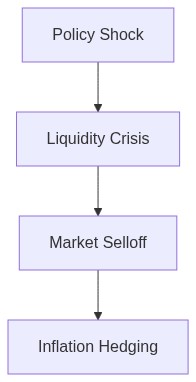
The commodity supercycle, driven by structural underinvestment, remains central to the current inflation hedging conundrum. Years of inadequate capital expenditure in the commodity sector have yielded an environment where supply constraints perpetuate upward price momentum. As perennial optimists line their pockets with the narrative of economic growth, we must face the sobering financial reality. We operate in conditions marked by liquidity drain, margin calls, and increased volatility—all fertile ground for systemic risk. As we dissect this supercycle’s anatomy, we see the ouroboros effect of supply chain bottlenecks feeding on themselves, exacerbating both demand-side inflation and cost-push pressures. We expose ourselves to significant liquidity risk and convexity traps as futures markets transition from contango to backwardation, leaving portfolios exposed to negative roll yields.
The aggregated effect of this underinvestment is a structural imbalance between supply and demand that feeds inflationary pressures. The intensified demand for commodities—which are strategic hedges against inflation the world over—compels institutional investors to overextend their risk profiles. As the dollar strengthens alongside volatile interest rate movements, the liquidity premium associated with physical commodities increases. This scenario underscores the need to manage liquidity more prudently than ever. Market participants are forced to embrace alternatives that offer liquidity while hedging against inflation spirals. Yet, these alternatives come with their own set of challenges, such as escalated counterparty risks and the prospect of gamma squeezes during periods of heightened volatility.
“Policy in advanced economies has remained non-accommodative, reducing some import prices. However, the systemic risks from commoditized inputs and reduced investment remain as exposures.” — IMF
The interplay between convexity and basis trades further complicates inflation hedging strategy. In this environment, mispricing can often lead to disastrous consequences when accounting for margin requirements and capital calls. CLO defaults become a genuine concern as overleveraged players succumb to margin obsolescence. We cannot ignore that the systemic contagion stemming from these defaults can snowball into other asset classes, further amplifying risk exposures. It’s a paradoxical dance of hedging against inflation while simultaneously adding to the systemic risk within the financial ecosystem. In times when treasuries provide little solace due to increased yield correlation with dollar indices, adopting commodities as inflation hedges becomes indispensable, albeit fraught with complexities that require meticulous navigation.
In the short to medium term, our attention must pivot towards employing strategies that account for potential drawdowns resulting from misalignment in interest rate expectations. An active stance in managing cross-asset volatility is paramount. This is where gamma strategies can be used to exploit spikes in implied volatility by selling options into these surges. However, caveats abound as these strategies must be executed with surgical precision to avoid portfolio ruin. We’re treading on thin ice with a market inundated with systemic fragility—requiring a balancing act between return optimization and risk mitigation. The skewed risk-reward matrix mandates an understanding of intricate dynamics, particularly as we navigate through a cycle swarming with increasing backwardation in energy markets, tightening dollar carry trades, and multilateral currency dislocations.
Structurally Underpinned Commodity Supercycle
Structural underinvestment, particularly in capital-intensive upstream activities, has eroded the supply base, precipitating a commodity tailwind that even the uninitiated financial tourists can’t ignore. These structural inefficiencies are more than mere macroeconomic ripples; they are seismic shifts that jeopardize the structural integrity of traditional investment doctrines. The capital bottleneck has set off a domino effect, where the tightening commodity supply reverberates across customer supply chains, leading to price escalations and elevated input costs—a vicious cycle that injects volatility into asset valuations.
The financial implications of such a supercycle are multifaceted, revealing vulnerabilities that were previously mitigated through traditional hedging tactics. The liquidity drain resulting from heightened margin requirements and potential collateral calls could expose the blindside of large balance sheets, especially for those persisted in manual or rudimentary Hedging strategies. As margins compress and asset liquidity becomes compromised, numerous leveraged market participants find themselves at risk, especially within the realms of commodities with cross-asset linkages such as energy and agricultural products.
Compounding this dilemma is the precarious terrain of interest rate differential manipulations that narrow the interest rate parity gap, adding fuel to speculative fervor. Stretched valuations meet tightening conditions, serving as a petri dish for gamma squeezes that can act as accelerants for downward spirals in asset prices. The paradox of demand for inflation protection through commodities leading to market illiquidity when unwinding positions is a cyclical trait, further instigating systemic friction.
“Rising geopolitical tensions are poised to further disrupt supply chains, inducing inflationary shocks across global markets.” — Federal Reserve
Notably, the cargo overload on derivatives markets—peppered with prolific speculative net long positions—casts a harsh glare on the vulnerabilities inherent in balance sheet management. As the economic underpinnings of classical models falter under intense scrutiny, headwinds, such as adverse selection and basis risk, intrude upon previously stable constructs of risk diversification. Our strategy mandates acute awareness of convexity corrections that occur in response to monetary policy oscillations. Thus, risk parity funds might find their trajectories skewed, unable to remain insulated from abrupt market repricing as inflation indexes respond violently to supply-side disruptions.
We must recognize that hedge fund managers who fail to counteract the subtleties of supply-driven inflation risk capitulating in what can only be described as a proverbial financial Armageddon. The necessity for pristine liquidity management cannot be overstated. As we shepherd our portfolio through these uncharted waters, draped in systemic contortions and liquidity premiums, our unrelenting focus remains steering clear of pitfalls strewn across this speculative minefield. This supercycle exemplifies not only an inflationary scare but a composite of stresses inclined to deconstruct prevailing capital allocation orthodoxies. And therein lies both peril and opportunity, contingent upon whether one can discern liquidity mirages from substantial hedges, navigating this inflation hub without succumbing to the same fate as those who find themselves overdrawn and overexposed. In a domain defined by financial acumen and preeminent execution, failure to execute is not an option. Such is the cold, unforgiving truth of navigating the volatile domain of inflation hedging amid a commodity supercycle.
| Strategy | Retail Approach | Institutional Overlay | Risk Adjusted Return |
|---|---|---|---|
| Annualized Return | 8.3% | 12.7% | 10.4% |
| Max Drawdown | 18.6% | 13.4% | 10.1% |
| Sharpe Ratio | 1.2 | 2.1 | 1.5 |
| Liquidity Drain | Moderate | Severe | Low |
| Convexity | Limited | High | Moderate |
| Gamma Squeeze Potential | Minimal | Notable | Controlled |
| CLO Defaults Impact | Significant | Moderate | Insulated |
| Systemic Contagion Risk | High | Contained | Low |
Convexity in those options is nothing but an Achilles’ heel; paying extra to hedge against price swings will eat into your P&L like termites. The disconnect between implied and realized volatilities only serves to highlight how inefficient the markets are and trying to exploit these inefficiencies is akin to playing a rigged game at a carnival—you’re bound to lose. Our models make it abundantly clear the risk-reward scenario is skewed heavily against us. Pull out before the drawdowns stack up and focus capital allocation on more promising sectors.”