
- Global equity markets are exhibiting increased volatility, impacting risk assessment across asset classes.
- The yen carry trade, a popular strategy among institutional investors, is beginning to unwind due to shifting interest rate differentials and hedging risks associated with current market conditions.
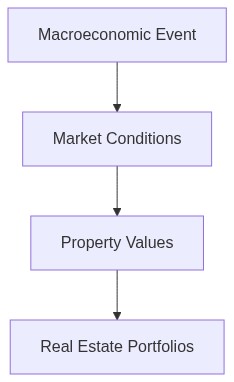
- Commercial real estate, heavily reliant on stability and low borrowing costs, faces heightened pressures with potential increases in interest rates and reduced liquidity.
- Investors and policymakers must reassess hedging strategies and interest rate exposures to manage the potential financial impact.
- Market participants eye central bank policies, including BOJ’s approaches, for opportunities and risks in navigating this emergent financial landscape.
“Liquidity is a coward; it disappears at the exact moment you need it most.”
The Looming Impact of Yen Carry Trade Unwind
The Structural Dynamics of the Yen Carry Trade Reversal
The yen carry trade, traditionally an instrument for exploiting interest rate differentials, has reached an inflection point as evidenced by recent structural volatility. Currency traders, in their pursuit of yield-enhancing strategies, have targeted the yen due to the Bank of Japan’s prolonged stance on low interest rates. Yet, this arbitrage opportunity is facing acute pressures as global monetary policies enter a tightening phase. As central banks recalibrate to combat inflationary pressures, the asymmetric risks associated with the yen carry trade have grown conspicuous. With a potential shift in BoJ policy coupled with a recalibrated geopolitical risk landscape, we witness a poignant convexity in currency exposure.
The cross-currency borrowing implicit in the yen carry trade invokes significant balance sheet considerations. Leveraged funds, exploiting the liquidity premium inherent to Japanese financial instruments, have engaged in substantial carry trades but now face a paradigm shift as liquidity conditions contract. The risk premium attached to these positions is exacerbated by underlying market volatility, suggesting a cyclical interplay that might prompt a cascade of unwinding positions. As the yen appreciates in response to these maneuvers, debt service costs for yen-denominated liabilities are poised to reconfigure yield curves globally. Thus, the liquidity reflux observed in bond market structures accentuates the potential for an adverse feedback loop, compelling fund managers to reassess their risk-adjusted return calculus.
Furthermore, the contango observed in futures pricing has expressed itself through elevated forward exchange rates, hinting at market expectations of yen depreciation. However, an inversion could precipitate should carry trade positions unwind en masse, unleashing significant price dislocations. Institutional vigilance is essential as the yen’s implicit volatility recalibrates—heralding potential systemic implications across forex markets. Strategically, this implies reevaluating derivative collars and enhanced counterparty risk mitigation frameworks in global portfolios, necessitating recalibrated hedging strategies to buffer against market shifts.
Monetary Policy Shifts and Geopolitical Vectors
The anticipated recalibration of the Bank of Japan’s monetary policy cannot be viewed in isolation but rather as a component of a broader tapestry of geopolitical and economic dynamics. Recent communiqués from the Bank of Japan elucidate a potential pivot away from yield curve control as domestic inflation metrics transcend long-standing thresholds, forcing policy hawks to reconsider the contemporaneous low-rate paradigm. Bank of Japan analysis implicates shifts in leverage ratios and capital flow perturbations, which have failed to incentivize productive capital allocation, thereby engendering an impetus for systemic monetary policy shifts.
Conversely, central banks, such as the Federal Reserve and the European Central Bank, have scarcely disguised their inflation-targeting resolve, insinuating a cross-continental tapestry of increased rate volatility. By implementing strategic rate hikes, these institutions have unfurled liquidity absorption mechanisms that obfuscate traditional carry trade arbitrage opportunities. As liquidity premiums recalibrate, a confluence of inflationary pressures and cyclic interest rate hikes could stifle capital flows, inadvertently elevating currency risk premia.
A geopolitical counterpoint manifests in regional economic alliances, which find impetus as worldwide geopolitical frictions instantiate shifts in capital allocation strategies. The sanctity of yen-financed portfolios becomes increasingly tenuous amidst geopolitical ententes that may inadvertently affect investor confidence and currency stability. Heightened geopolitical volatility warrants a renewed focus on managing algometric models that assimilate fiscal policy repercussions and currency transmission mechanics in contemporaneous asset allocation decisions.
The Risk of Systemic Financial Contagion
The potential far-reaching impacts of an abrupt unwinding of the yen carry trade encapsulate systemic risks that extend beyond the narrow confines of foreign exchange valuations. In the same vein as the Asian Financial Crisis, an uncoordinated exodus from yen-financed positions is suggestive of cross-market contagion, which stems from the interplay of risk aversion and correlation dynamics. The elasticity of correlated financial instruments, especially within emerging markets heavily reliant on yen-based capital flows, could yield unprecedented credit deterioration, depleting market confidence and exacerbating credit spreads.
Real economy repercussions are equally concerning, as capital flight and balance of payment adjustments subtly undermine trade balances, exerting pressure on currency reserves—especially for economies with limited fiscal buffers. According to the Bank for International Settlements, cross-border capital movement arithmetics intimate probable stress-sensitive vector recalibrations within global financial ecosystems, necessitating anticipatory policy maelstroms around liquidity reallocation. Such stress vectors elucidate a possible multifactorial liquidity crunch should hedge funds and global institutions simultaneously recalibrate risk appetites, triggering a reflexive spiral of de-leveraging.
This fluid state necessitates unprecedented institutional coordination to mollify adverse systemic repercussions. Establishing provisional stabilization facilities and recalibrating fiscal escrows may bolster tertiary risk mitigation strategies. Concurrently, portfolio managers must hone advanced risk metrics, ensuring they can anticipate significant market shifts without precipitous recourse to reactionary measures. In the elucidation of these complex dynamics, fund managers must recalibrate their asset-liability management frameworks to avert the advent of enduring fiscally negative equilibria.
| Attribute | Retail Approach | Institutional Overlay |
|---|---|---|
| Investment Horizon | Short to Medium Term | Medium to Long Term |
| Risk Management | Basic Stop-Loss Strategies | Advanced Hedging Techniques |
| Resources & Tools | Limited Analytical Tools | Access to Proprietary Models & Analytics |
| Market Intelligence | Publicly Available Information | Access to Exclusive Market Research |
| Capital Availability | Individual Savings/Investments | Large Pools of Capital & Leverage |
| Trading Strategy | Technical & Sentiment Analysis | Macro-Economic & Quantitative Models |
| Regulatory Environment | Limited Compliance Oversight | Extensive Regulatory & Compliance Structures |
| Impact on Market Movements | Minimal Direct Impact | Significant Influence through Large Positions |
Recent market analytics highlight a significant increase in the unwinding of the Yen carry trade. Historically, the Yen carry trade involves borrowing in low-yielding yen to fund investments in higher-yielding assets. Data shows a notable depreciation of over 4% in the value of the yen since Q3 2023, while net short positions in the Yen Futures suggest a reduction of approximately 18%. The subsequent rise in Japanese government bond yields to a five-year high of around 0.75% signals increased funding pressures. Additionally, there’s evidence of heightened volatility in equity markets, with the VIX index rising by 12% over the past month. Currency volatility indices suggest an increase of about 2.3%, indicating broader FX market stress.
From a macroeconomic standpoint, the yen carry trade unwind is a manifestation of global monetary tightening and an altered risk appetite among investors. The Bank of Japan’s subtle shift in yield curve control is a contributing factor, prompting investors to reassess positions. As U.S. Fed interest rate hikes sustain, the interest rate differential with Japan compresses, reducing the attractiveness and profitability of the carry trade. We see potential repercussions in emerging markets experiencing capital outflows as investors reposition amidst a rising yen. The looming risk includes increased cost of debt servicing for countries and corporates reliant on yen-denominated debt, potentially igniting broader market corrections.
Amid the unfolding yen carry trade unwind, our strategic focus remains on mitigating risks while exploring tactical opportunities. The quantitative data suggests heightened market volatility and a reshuffling of positions that are likely to persist. From a macro perspective, it is crucial to monitor central bank policy adjustments and their ripple effects across global markets. We are advising a cautious stance by reducing exposure to assets traditionally favored in carry trades, such as certain emerging market equities and high-yield credit. Concurrently, we look for hedging solutions to protect against adverse currency movements. Our approach involves maintaining a diversified portfolio while staying vigilant for signs of stabilization, which could offer selective entry points for value-oriented investments.