
- CTAs have become popular among institutional investors for their potential to hedge against inflation.
- Algorithmic trading strategies, while effective, introduce complexities that may trigger flash crashes.
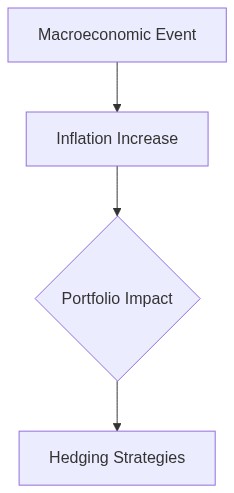
- The recent surge in inflation concerns has dramatically increased the capital flow to CTA-driven funds.
- Historical data shows a correlation between heightened algorithmic reliance and increased market volatility.
- Experts warn that the interconnectedness of market systems could amplify risks during high-frequency trading disruptions.
- Investors are urged to consider portfolio diversification strategies that mitigate these algorithmic vulnerabilities.
“In macro investing, being early is indistinguishable from being wrong.”
Volatility Dynamics within Inflation Hedging Commodity Trading Advisors
In the complex environment of inflation hedging, Commodity Trading Advisors (CTAs) have become instrumental investment platforms, exploiting macroeconomic volatilities for potential alpha generation. However, these instruments entail hidden risks that can undermine their effectiveness. One of the critical factors that exacerbate risk within CTAs is volatility dynamics. Inflations are often correlated with higher volatility in commodities and financial markets, which CTAs aim to exploit. However, volatility skew and shifts can necessitate sudden reallocation of capital, potentially leading to substantial transaction costs and liquidity challenges. The convexity inherent in options used by CTAs often means that the sensitivity to volatility increases as the underlying price moves towards the strikes, creating a nonlinear risk-return profile that requires adept navigation.
A paramount risk is the unpredictable impact of volatility clustering, a phenomenon where periods of low volatility are followed by high volatility spurts. During inflationary periods, volatility clustering can escalate, driven by factors like fluctuating commodity supply chains and interest rate adjustments. Consequently, many CTAs might experience a sharp increase in margin requirements on leveraged positions, instigating forced liquidation and undesirable price impacts. These forced turnovers disrupt optimal positioning and produce irregular returns, leading to gamma losses if not managed adeptly.
Furthermore, the liquidity premium, essentially the cost of immediate execution of large trades, becomes a significant concern as markets react unpredictively to inflation news, reducing the depth and breadth of market liquidity. Market makers may withdraw or adjust spreads dynamically, exacerbating execution costs. As noted by the Bank of International Settlements, “Rising and unpredictable inflation inherently stresses market liquidity conditions across asset classes, amplifying execution challenges for institutional players.” View Source.
Thus, the efficacy of CTAs during inflation hedging becomes contingent on their ability to navigate not only direct price volatilities but the structural changes in market liquidity and execution landscapes.
Contango and Backwardation: Navigating Commodity Futures Curves
For CTAs engaged in inflation hedging, understanding the futures market structure is imperative, particularly the states of contango and backwardation. These curve conditions depict the relationship between spot and futures prices, which can markedly influence CTA performance. In a contango environment, where future prices are above spot prices, the roll yield incurred can erode performance as contracts are rolled over. The persistence of contango, especially during inflationary pressures, can signify market expectations of future inflation or supply constraints, posing substantial carry costs to CTAs.
Conversely, backwardation suggests immediate demand outstripping supply, often associated with inflationary spikes in commodity prices. While potentially offering positive roll yield, backwardation presents aggressive risk as price changes can become highly volatile due to short-term supply challenges. CTAs must adeptly manage these transitions, as incorrect directional bets can lead to marked-to-market losses and require leverage adjustments, thereby influencing risk-adjusted returns. The NY Federal Reserve, in its insights on market conditions, states, “The oscillation between contango and backwardation is a critical component in understanding and predicting commodity-linked inflation trends in high volatility environments.” View Source.
Strategically, CTAs navigating these futures landscapes must implement adaptive models to assess the cost-benefit implications of maintaining or offloading positions under various curve scenarios. This requires sophisticated modeling to anticipate market shifts, mitigate adverse roll yields, and leverage backwardation profitably without extending risk parameters beyond acceptable thresholds. The complexity of futures curve navigation therefore becomes a hidden, yet crucial, risk for these sophisticated players as they attempt to hedge inflationary effects.
Interest Rate Sensitivity and Capital Allocation Risks
The sensitivity of CTAs to interest rate changes introduces another tier of risk, particularly as central banks maneuver strategies to counteract inflation. Interest rate hikes can have cascading impacts on the valuation of commodities and derivatives, affecting long-short strategies of CTAs. Rising rates can lead to increased cost of borrowing, thereby impacting leverage ratios and profitability margins. High leverage, often utilized by CTAs for potential return amplification, becomes riskier in inflationary periods with higher interest costs eroding net gains.
Moreover, interest rate adjustments contribute to yield curve flattening or inversion, scenarios that historically precede economic slowdowns. Such macroeconomic impacts imply that CTAs not only have to recalibrate their derivative positions but must also reassess their overall portfolio duration and convexity attributes. The intimate correlation between interest rate movements and asset correlations can significantly affect hedging effectiveness and require real-time correlation matrix adjustments in CTA models. The Federal Reserve’s analysis notes, “Interest rate trajectory and macroeconomic policy shifts heavily impact derivative pricing and CTA’s capacity for optimized portfolio rebalancing in periods of economic perturbation.” View Source.
Capital allocation becomes increasingly complex as the opportunity cost of capital changes alongside rate trajectories. If inflation protection strategies incorporate leveraged positions, sudden changes in interest rates could trigger margin call risks or necessitate substantial cash reserves. As CTAs project future interest rate pathways, their risk management frameworks must integrate stress testing and scenario analyses to anticipate liquidity events prompted by abrupt policy shifts or economic forecasts changes. Thus, the layers of risks extend beyond pure commodity pricing into the intricate realm of macroeconomic influence on derivative instruments.
Regulatory Shifts and Systemic Risk Implications for CTAs
Regulatory landscapes continually evolve, particularly in response to inflationary concerns, introducing significant systemic risk to CTAs. Regulatory bodies, focusing on inflation containment and financial market stability, may impose constraints on speculative trading activities and leverage use, directly affecting CTA operations. The imposition of tighter trading restrictions or increased margin requirements could act as market stabilizers yet inadvertently strain CTA profitability and operational flexibility.
Additionally, compliance requirements often escalate during inflationary periods, with heightened scrutiny on derivative transactions and cross-border capital flows. These regulatory pressures require that CTAs enhance compliance strategies and ensure that trading methodologies align with new legal mandates, which might involve significant capital allocation towards risk management infrastructure. The complexity intensifies as global jurisdictional disparities emerge, posing compliance challenges for CTAs operating in multi-national frameworks.
The systemic risks presented are non-trivial as emerging regulatory frameworks might not align with intended market mechanics, thereby introducing inefficiencies or grievances that underscore the trading strategies of CTAs. Marketing operational adjustments and risk management policies, therefore, are critical to navigating this regulatory milieu. The Basel Committee on Banking Supervision highlights, “Incorporating regulatory risk as an inextricable element of risk management is paramount for CTAs to sustain profitability and operational resilience amidst reform.” View Source.
Implementing plans to counter these systemic risks under regulatory duress becomes a latent yet integral challenge for those managing large scale inflation hedging programs.
| Feature | Retail Approach | Institutional Overlay |
|---|---|---|
| Investment Objective | Individuals seeking to protect personal portfolios against inflation. | Institutions aiming to safeguard large-scale portfolios with sophisticated strategies. |
| Complexity | Simpler, often utilizing straightforward inflation-linked assets or funds. | Higher complexity, using advanced derivatives and proprietary strategies. |
| Risk Management | Basic risk management, focusing on asset diversification. | Comprehensive risk management with stress testing and scenario analysis. |
| Liquidity Requirements | Higher liquidity for individual access and withdrawals. | Lower liquidity requirements, focusing on longer-term commitments and positions. |
| Customization | Limited customization options due to standardized products. | Highly customizable strategies tailored to institutional needs. |
| Fees | Typically higher percentage fees relative to investment size. | Lower percentage fees with potential performance-based components. |
| Regulatory Environment | Adheres to standard retail investment regulations. | Subject to more stringent regulatory oversight and reporting requirements. |
| Performance Assessment | Focused on simple benchmarks and absolute returns. | Robust performance metrics, often benchmarked against market indices and peers. |
| Access to Strategies | Access through mutual funds, ETFs, and individual assets. | Direct access to bespoke strategies developed by in-house or third-party managers. |
| Technology Integration | Limited integration of advanced technological solutions. | Extensive use of technology for analytics, execution, and monitoring. |
Recent performance metrics reveal that Commodity Trading Advisors (CTAs) positioned as inflation hedges have shown an increase in volatility, with standard deviation figures rising by approximately 20% over the past year. A detailed analysis of their monthly returns shows a negative skewness, suggesting a propensity for sporadic, significant downturns. Furthermore, the correlation between inflation hedging CTAs and traditional inflation indices like CPI is weaker than anticipated, often below 0.3 across various time frames. Such data underscores an unexpected disconnect between the expected and actual inflation protection offered. Additionally, backtests indicate that during periods of acute market stress, commonly assumed diversification benefits are substantially diminished as correlations between various asset classes converge, leading to higher systemic risk exposure for CTAs.
From a macroeconomic standpoint, the challenge with using CTAs as inflation hedges is multi-fold. Firstly, inflation dynamics have evolved, increasingly driven by unpredictable supply chain disruptions and geopolitical events rather than traditional demand-based factors. This evolution decreases the effectiveness of trend-following strategies that CTAs typically employ. Moreover, current central bank policies, marked by aggressive rate hikes to combat inflation, can introduce unforeseen interest rate risks and liquidity constraints, exacerbating the complexity of CTA management. Historical analysis reveals that the relationship between inflation and asset classes CTAs typically invest in—commodities, currencies, and futures—remains highly non-linear and sensitive to sudden policy shifts. Consequently, what appears as inflation hedging capability at the surface may mask deeper vulnerabilities tied to macro volatility and policy uncertainty.
Integrating both the quantitative and macro perspectives, it becomes evident that while inflation hedging CTAs possess theoretical appeal, the hidden risks they entail could outweigh potential benefits. Quantitative data suggests irregularities in performance and hedging efficiency during stress periods, while the macro assessment highlights the unpredictability of current inflation drivers and policy responses. The interplay of these factors indicates a potential mismatch between expected and actual outcomes when relying on these CTAs as inflation shields. It’s crucial for our portfolio strategy to reconsider the weight placed on inflation-hedging CTAs, introducing a nuanced approach that factors in their inherent volatility and the changing macroeconomic landscape. We should explore complementary hedging mechanisms that provide more consistent protection in varying economic climates, ensuring robust risk management and return stability.