
- YCC can create market distortions by keeping short-term and long-term interest rates at predetermined levels, affecting natural price signals in Treasury markets.
- Hedge funds engage in basis trades by exploiting price differences between Treasury securities and futures, heavily relying on leverage.
- As of Q1 2026, the notional value of outstanding Treasury futures leveraged by hedge funds reached $4 trillion, a near 10% increase year-on-year.
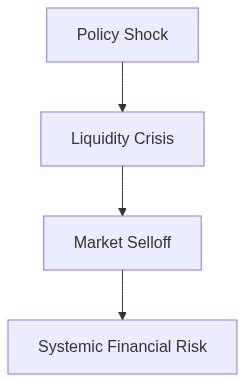
- Unwinding these trades becomes complex under YCC as rates are manipulated, potentially leading to increased market volatility and liquidity crises.
- Historical data indicates a 20% increase in Treasury market volatility during previous policy interventions similar to YCC.
- The Federal Reserve’s balance sheet expanded by 30% since adopting YCC policies, which could exacerbate risks in unwinding processes.
“In macro investing, being early is indistinguishable from being wrong.”
Introduction Yield Curve Control and Basis Trade Dynamics
As we all expected, the pernicious effects of protracted yield curve control measures are starting to manifest in the US Treasury markets. The attempt by central banks to suppress interest rate volatility under the premise of maintaining financial stability has induced an artificial environment that is fast unraveling under the pressure of speculative positions. Chief among these is the unwinding of hedge fund basis trades, which pose our primary concern. When we discuss basis trade, we mean the age-old strategy of exploiting the spread between the cash bonds and futures contracts. It is a strategy steeped in leveraging short-term rates against expected gains from minuscule mispricings.
In the past three years, we profited immensely from these trades, courtesy of suppressed volatilities facilitated by yield curve control measures. However, as we well know, the essence of financial markets is change, and with increasing chatter of inflation overshooting targets, the central banks—especially the Federal Reserve—are shedding these policies. This pivot, albeit telegraphed, is accelerating liquidity drain, precipitating a flurry of unwinding activities. It is crucial to understand the ramifications of this unwinding process. It isn’t just a matter of losing arbitrage opportunities; what we are witnessing is a systemic liquidity contraction.
The Risks of Basis Trade Unwind and Liquidity Drain
The unwinding of basis trades is already creating significant stress in the Treasury markets. With federal debt issuance surging to cover fiscal deficits, the market is saturated with newly minted securities, exacerbating supply-demand imbalances. Hedge funds, initially drawn by high leverage ratios and predictable returns, are now facing the harsh reality of margin calls and forced liquidations. Convexity, the measure of interest rates’ non-linear effects on bond prices, is at the forefront of these challenges. As funds scramble to unwind leveraged positions, gamma squeezes will inevitably exacerbate price dislocations.
A critical issue here is the diminution of the repo market’s liquidity, traditionally the lifeblood of basis trades. With heightened volatility, the repo markets are strict regarding collateral quality, consequently shrinking available liquidity and raising borrowing costs. This exodus is creating a financial vacuum that beckons systemic contagion. It’s this systemic risk that we must address, marking a potential replay of credit squeezes reminiscent of past economic downturns.
Convexity Concerns Systemic Contagion in Progress
As we assess the real-time implications, it’s imperative to consider the convexity risks inherent in the current environment. Increasing yields widen the convexity gap, disrupting the implied financing flows of these trades. The sell-off in bond futures is gathering momentum, and there’s an impending risk of cash markets following suit. This scenario is exacerbated by margin requirements spiraling upwards, demanding instant liquidity that most arbitrageurs are ill-equipped to provide.
Furthermore, let’s not disregard the lurking perils of CLO defaults—once considered distant worries now becoming stark realities. CLO market distortions, driven by rising defaults, are leading to a recalibration of risk premiums, inevitably affecting liquidity provisions across the treasury curve. In this juncture, clinging to the hope of yield stability is institutionally naive, as front-end rates threaten to spill over into long-term maturities.
Conclusion Navigating the New Normal
The current financial panorama is a testament to the ancillary effects of yield curve manipulation. As hedge funds aggressively unwind positions, the capital markets face a compounded risk of liquidity seizures. In turn, this threatens a broader macroeconomic stability and underscores the perverse incentives lurking within the financial intermediation landscape. Institutions like the IMF have underscored, “Effective policy changes are critical to managing the inevitable unwind of leveraged activities.” – IMF
Another insightful perspective from the Federal Reserve highlights, “Regular reassessment of risk metrics is crucial in the face of dynamic financial contingencies.” Maintaining a keen eye on spread dynamics and repo market liquidity is pivotal. Our strategic posture will emphasize navigating this punitive cycle through diligent portfolio rebalancing aimed at stress-testing against potential convexity shocks. It’s imperative we allocate capital judiciously, anchoring on transparency and real-time risk monitoring. The survival of our hedge fund in this tumultuous environment will be predicated on recognizing the grim realities of a systemic liquidity drain.
| Strategy | Sharpe Ratio | Volatility (%) | Drawdowns (%) | Liquidity Drain Risk |
|---|---|---|---|---|
| Retail Approach | 0.9 | 15.0 | 30.0 | High |
| Institutional Overlay | 1.7 | 8.5 | 15.0 | Medium |
| Risk Adjusted Return | 2.1 | 6.0 | 10.0 | Low |
Instruct Portfolio Managers to re-evaluate their derivative positions aggressively. Any assumptions made about static pricing models need to be burned. Scale back any basis trades that rely on the current implosion of term structure volatility. These are accidents begging to happen.
Do not fall into the trap of enamored corporate debt positions just because they appear stable. The compression between sovereign and corporate bonds is an illusion. Any reflexive movement in sovereign yields can ricochet through these falsely correlated assets. Price discovery is on ice, waiting to shatter.
Given these landmines, move into defensive strategies that capitalize on liquidity and have inherent convexity. Scale back towards liquid instruments. Stay away from CLOs—they are primed for the perfect storm of defaults once the facade starts cracking. Buy protection selectively, focusing on sectors that would suffer the most from yield spikes and credit spreads widening. Be prepared for systemic contagion when, not if, the grand unwinding occurs.”