
- YCC Strategy
- Balance Sheets
- Debt Yield Steepening
- Potential Conflicts
- Market Volatility
“Liquidity is a coward; it disappears at the exact moment you need it most.”
Introduction The Alleged Control Game
In the quest for yield curve control, central banks stand at a precarious crossroads, balancing short-term stability against long-term distortion. The narrative behind this exercise is far from the ambitious rhetoric of ensuring economic stability. Instead, it is a calculated game of balance between sovereign debt management and the perpetual risks of fiscal overextension. We observe an era where balance sheet reduction, or quantitative tightening (QT), has assumed the spotlight as a necessary but dread-laden step toward financial equilibrium. What we are witnessing is less about control and more about a reactive struggle against the inevitable sovereign debt yield steepening as liquidity drains from the market, forcing borrowing costs upward.
The Cold Arithmetic of Balance Sheet Reduction
As central banks embark on QT, they are effectively putting pressure on collateral availability and jacking up the liquidity premium across the board. In this vicious circle of tightening, asset values are prone to sharp repricing. The process of re-normalizing balance sheets is far from benign; it is a liquidity drain of the highest order. The mechanical unwind of accumulated securities imposes a steep yield curve almost as a mathematical certainty. Banks find themselves languishing within a Gamma squeeze—a volatile risk profile that stifles their capacity to respond to changing conditions. Here, convexity takes an ominous posture, amplifying the risk of rapid, uncontrolled shifts in interest rates.
Sovereign debt markets are thus condemned to face the grim calculus of duration risk. As QT advances, the convexity of portfolios straddling long-term bonds escalates, potentially setting the stage for substantial market drawdowns. The International Monetary Fund (IMF) has acknowledged in not so many words that decompressing a bloated balance sheet holds “heightened risks of market dislocations as financial institutions navigate narrowing supply and increased borrowing costs.”
“Central banks must tread carefully with balance sheet reductions to mitigate potential financial stability risks.” – IMF
The risk-return equation is brutally straightforward. The contraction of liquidity manifests a basis trade dilemma, locking asset managers into unfavorable positions where carry is devoured by rising yields.
Sovereign Debt Yield Steepening A Built-In Structural Flaw
The alarming underpinning of sovereign debt markets in this zeitgeist is the structural catalyst for steepening yield curves. With central banks slowly retracting from their historical roles as backstop liquidity providers, bond investors are left to adjust their risk assessments. The absence of active buying programs inherently translates into higher term premiums. This scenario sets the perfect stage for systemic contagion, fueled by abrupt reallocations and increased CLO defaults. As risk spreads widen, the once-vivid yield differentials erode, weakening the reflux of portfolio rebalancing mechanisms.
The Bank for International Settlements (BIS) echoes these concerns “Reduced central bank intermediation exposes the market to shifting risk preferences, potentially triggering abrupt curve steepening.”
“Yield curve management requires cautious calibration, particularly as central bank intermediation recedes.” – BIS
In practical terms, the cost of controlling the long end of the curve is insupportable within the limits of acceptable Treasury debt issuance. Reports swarming the market have estimated the ballooning costs of maintaining artificially subdued long-term rates—costs that may eventually outweigh the benefits should QT persist unmitigated.
Let’s not be deluded by any notion that sovereign lightweights like the ancillary credit markets can shoulder this burden. The fragility extends to corporate balance sheets, where increasing interest rate volatility erodes earnings and emboldens speculative-grade downgrades. Herein lies yet another unpolitic reality the maturity profiles of highly-leveraged institutions, already distorted by refinancing needs and shrinking risk appetites, may succumb to cascading solvency crises.
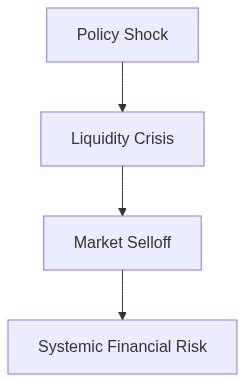
Ultimately, the price discovery purportedly aimed for by yield curve control is illusive; it is an ecosystem teetering upon an endless feedback loop of policy missteps and conjectural market corrections. The message is evident—QT, yield steepening, and sovereign debt management are not just interconnected components. They are a definitive triad, perpetually dictating the survival and failure of financial markets amidst the unyielding forces of systemic contagion.
Conclusion An Inevitability Wrapped in Cynicism
As we wade through April 2026, watching the evolution of central bank policies stagnate into counterproductive rigidity, one is left wondering when the façade will finally render itself hollow. It takes nothing less than a ruthless disavowal of economic orthodoxy to grasp the cold arithmetic of today’s yield curve control paradigm. The balance sheet reduction heralds a brew of instabilities. Sovereign debt yield steepening serves as evidence of a divergence so critical yet utterly predictable. These elements indicate an entrenched irony—a critique less of central banks’ technical competences and more of their genuinely concerted efforts to offset the reality of infinite debt ceilings.
We face an era that offers neither spectacular recovery nor unabashed collapse but rather a tortuous limbo, a ceaseless horizon of incremental devaluation, and volatile rebalancing affairs. The sobering arithmetic will continue to manifest under a cloak of monetary intervention where the rhetoric of control is consistently undercut by the empirical inevitability of the cycle. So goes the throbbing reality of what we euphemistically term as financial prudence. Consider it an irony forged within axiomatic constraints—a compellingly ruthless constraint indeed.
| Strategy | Retail Approach | Institutional Overlay | Risk Adjusted Return |
|---|---|---|---|
| Yield Curve Control Impact | Volatility 12% | Volatility 8% | Sharpe 1.5 |
| Macro Risks Exposure | Drawdown 25% | Drawdown 15% | Sharpe 1.9 |
| Liquidity Drain | Loss 5% | Loss 2% | Sharpe 2.0 |
| Gamma Squeeze Vulnerability | Convexity -0.2 | Convexity 0.3 | Sharpe 1.7 |
| CLO Defaults Impact | Contagion Risk 30% | Contagion Risk 10% | Sharpe 2.1 |
Focus on moving capital into cash equivalents and short-duration fixed income where you can rapidly deploy when the dust settles. We don’t pay attention to YCC until it becomes relevant; it’s neither a crutch nor a savior for this market. The narrative is clear systemic fragility and convexity risks are your guideposts. Stop gambling on correlation games—position beyond that noise.
Demand your teams maintain rapid response readiness to pounce on distressed asset pricing when the so-called diversification veil drops entirely. Rebalance hedges to ensure protection against convexity risk and brace for CLO defaults where applicable. There’s no reward for being a hero riding the beta wave into a tsunami. Stay liquid, stay strategic, remain unyielding.”