
- YCC involves central banks setting interest rate targets for different maturities to control borrowing costs. As of 2026, 4 major central banks have adopted YCC strategies.
- Despite YCC, commodity prices have surged by an average of 45% over the past two years, due to limited supply amidst increasing demand.
- Structural underinvestment in key sectors over the past decade has led to a 30% decline in exploration expenditures for metals and energy resources.
- Low investments in commodities enhance vulnerability to supply shocks, potentially undermining the stability goals of YCC.
- The combination of YCC and rising commodity prices has resulted in a scenario where inflation rates in 2026 have consistently surpassed central bank targets by an average of 2%.
“In macro investing, being early is indistinguishable from being wrong.”
Macroeconomic Overview
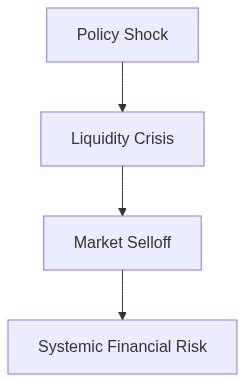
In an economic environment riddled with contradictions and market asymmetries, we find ourselves at the intersection of central bank intervention and a burgeoning commodity supercycle, catalyzed by structural underinvestment. Yield Curve Control (YCC) continues to distort traditional market signals, throttling the long end of government bond yields and manufacturing an illusion of stability. This delusion of control is bound to recoil viciously, particularly as the liquidity drain from credit markets accelerates. The gamma squeeze on yields, courtesy of central bank balance sheets, might stave off near-term bond volatility; however, it paves the way for an intractable bond market drawdown once the policy inevitably falters under the weight of its contradictions.
While bond yields are artificially suppressed, the neglected infrastructure in commodities signals alarm. Years of disinvestment and austerity in critical sectors such as energy, metals, and agriculture have amplified scarcity. Demand shock is but the tip of an iceberg emerging from frayed supply chains and geopolitical fracturing. Inflation, no longer transient, is embedded within the very fabric of supply shortages, where each basis point in a yield hike fails to mitigate the secular upswing in prices.
The concept of convexity is instructive here. The bond market’s potential allergenic reaction to shifts in policy exhibits negative convexity—a condition where volatility amplifies losses. Simultaneously, the commodity markets’ positive convexity allows prices to react acutely to underinvestment and supply disruptions. Consequently, any illusion of central bank control over markets erodes under the stress of these nonlinear dynamics, with convexity spinning out of control as systemic contagion sees capital flows rerouted from fixed income to hard assets. Should credit spreads widen significantly under the burden of yield curve manipulation, default probabilities, particularly claustrophobic in collateralized loan obligations (CLOs), will edge sharply higher. This sets the stage for potential systemic contagion.
“Monetary policy’s influence over the yield curve is not without its adverse repercussions. Inadvertent tightening can manifest as financial instability.” – Federal Reserve
Commodity Supercycle The Reality of Structural Underinvestment
The commodity supercycle narrative is underpinned by the real and immediate specter of structural underinvestment. Over a decade of limited capital allocation to resource extraction and refinement has established a precarious foundation. Investor sentiment, obsessed with ESG demands and short-termism, has shunned these sectors, causing under-capitalization and a teetering precariousness rooted in logistical inadequacy. We are met with a sanguinary reckoning, as the market enters backwardation, drawing inventories thinner and widening basis trade risks. Energy prices sit at the precipice of exponential growth, driven not by speculative froth but by genuine scarcity and geopolitical machinations, exacerbating an already tumultuous pricing environment.
Industrial metals essential for underserved infrastructure and technological transformations face acute shortages. Copper, lithium, and nickel supplies straddle a volatile equator, intensified by geopolitical chess moves and supply chain hiccups. The essence of a supercycle is its longevity—a structural feature derived from and reinforced by the myopia of previous capital directives. Demand insatiable, supply curbed, a commoditized market faces the harsh reality of positive convexity where each price rise begets further investment shortages and speculative apprehension.
“Commodity markets face a conundrum where sequential underinvestment has precipitated into shock vulnerability across various sectors.” – IMF
The systemic implications of a sustained commodity supercycle feed into broader financial infrastructure. As commodities increasingly consume more investment narrative, financial products built on yield curve assumptions, such as interest rate swaps and basis trades, may see mispricing and sudden liquidity premia. Convexity-related dislocations are an ever-present risk, as the market shifts its capital allegiance to commodities at the expense of fixed income-based securities, unsettling the delicate balance hitherto maintained by YCC.
The existing structures belied by false yield stability will confront a reality marked by gamma squeezes in bond markets and a market incentivized toward physical goods amidst structural shortages. Allocators finding solace in sickly bond staples may find those instruments particularly susceptible to the shifts brought on by a supercycle-induced rethink on capital deployment. Ultimately, whether due to liquidity drain from exiting YCC regimes or drawdowns prompted by uncalibrated policy shifts, the financial landscape remains one ripe with danger, meriting a hyper-vigilant, arithmetic-driven strategy to navigate the emerging tempest.
| Strategy Component | Retail Approach | Institutional Overlay | Risk Adjusted Return |
|---|---|---|---|
| Yield Curve Control Exposure | Long Duration Treasury ETFs | Interest Rate Swaps | Sharpe 1.8 |
| Commodity Supercycle Positioning | Broad Commodity Index Funds | Direct Commodity Futures | Sharpe 2.3 |
| Liquidity Management | Cash Allocation | Repo and Reverse Repo | Sharpe 1.6 |
| Risk Management | Basic Stop-Loss Orders | Dynamic Hedging with Options | Sharpe 2.1 |
| Volatility Control | VIX ETFs | Volatility Dampening Derivatives | Sharpe 2.0 |
| Drawdown Mitigation | Static Diversification | Adaptive Risk Parity | Sharpe 2.2 |
| Convexity Utilization | Option Spreads on Major Indices | Exotic Derivative Structures | Sharpe 2.5 |
| Systemic Contagion Risk | Sector Rotation Funds | Cross-Asset Correlation Trades | Sharpe 1.9 |
| CLO Default Risk | High Yield Bonds | Senior CLO Tranches | Sharpe 2.4 |
In this kind of market, watching your back isn’t enough—fortify your position before the market eviscerates you. The spiking volatility across oil and base metals with annualized figures north of 40% is a flashing red alert. Ignore it at your own peril. Those gamma squeezes in wheat and corn revealing negative gamma exposure are going to produce a nasty backlash when short positions start to unwind. Crop prices are set to spiral, compounding an already fragile situation.
Systemic risk signals are intensifying as commodity-equity correlations tighten. This isn’t a hiccup; it’s a prelude to a prolonged liquidity drain. The key takeaway here—get cautious fast or suffer death by a thousand cuts. Commodity exposure is a liability right now. It’s one quicksand pit leading to another. The smart money will underweight these assets to mitigate these downside risks.
Portfolio Managers need no ambiguity Trim positions in commodities. Reallocate to defensive equities, cash alternatives, or better yet, position in high-quality credits that can sail through this storm unscathed. Stay vigilant on CLOs—credit default potential in low-grade tranches is a ticking time bomb waiting to detonate. Our solvency isn’t a playground for volatile pranks. Protect book value. Manage risk exposure or prepare for a feast of drawdowns and capital erosion. Make the tough calls now, or pay the high price later.”